
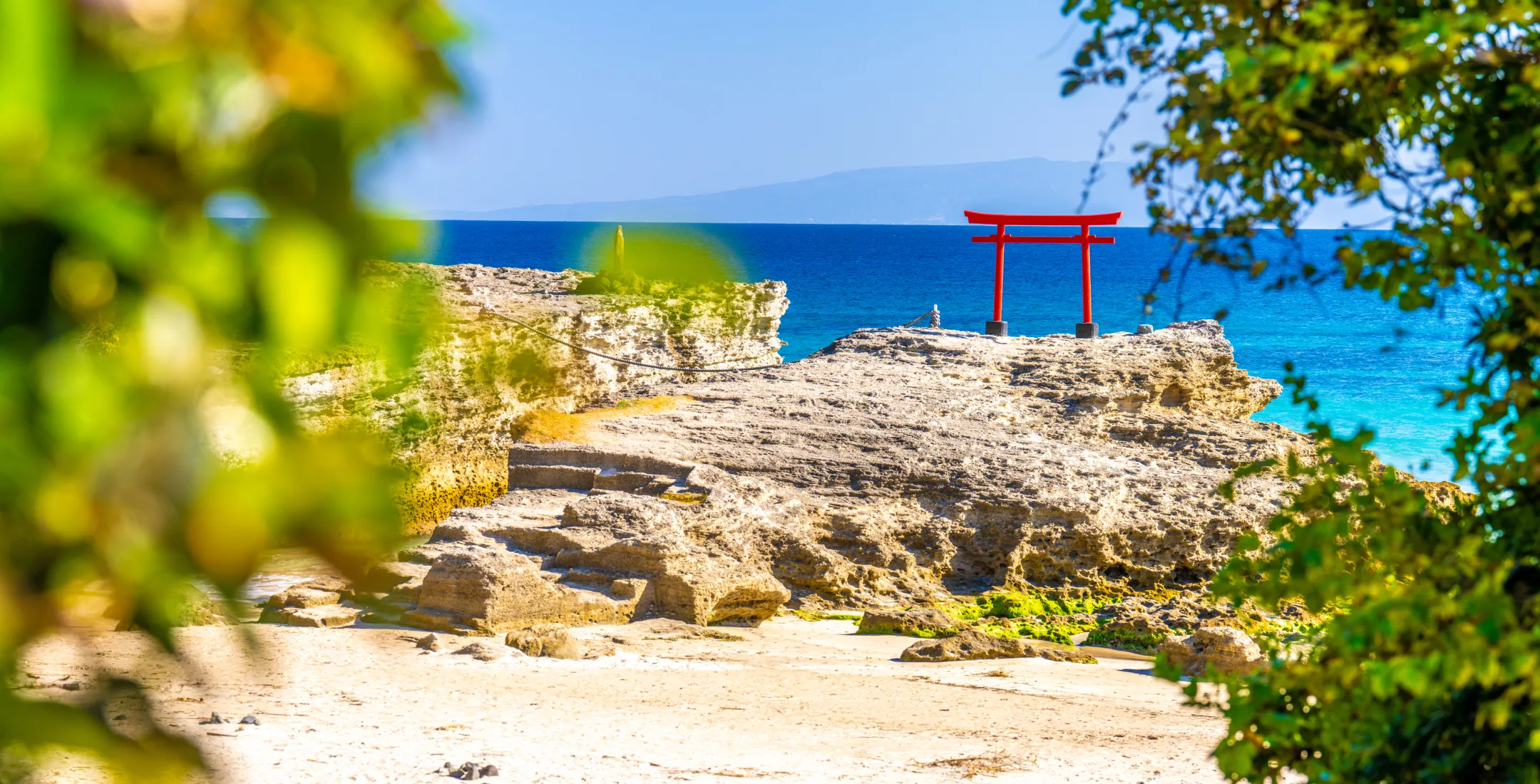
▲From PIXTA: "The vermilion torii gate standing on Shirahama Beach at Ikonahime-jinja Shrine (Shirahama Shrine)"
One of Japan's Top Power Spots
A Guide to Ikonahime-jinja Shrine (Shirahama Shrine)
Ikonahime-jinja Shrine is famous as one of Japan's top power spots.
Affectionately known as Shirahama Shrine, it is Izu's oldest shrine, with a history spanning more than 2,400 years since its founding.
Many visitors come to pray for good relationships and marital harmony.
Its highlights go far beyond the shrine grounds, from the vermilion torii gate standing on the rocks of Shirahama Beach to a sacred tree believed to be 2,000 years old.
In this article, we take a detailed look at the charms of Ikonahime-jinja Shrine and what makes it such a powerful spot.
We'll also introduce nearby sightseeing spots around Shimoda worth visiting on the same trip.
Article Summary
- Discover the charms of Ikonahime-jinja Shrine, Izu's oldest shrine with a history of more than 2,400 years, focusing on its blessings for good relationships and its sacred tree
- Learn why this shrine is considered a power spot, and explore the highlights of its grounds in detail
- Discover nearby sightseeing spots around Shimoda, including Ryuguu Cave, Ryosenji Temple, and Cape Tsumeki
- Also featuring Shimoda Prince Hotel, a convenient base for your visit
Shizuoka

- Shimoda
- Power Spot
Last Updated: April 17, 2026
Today's Destination
- Shrine Highlights
- Why It's a Power Spot
- Recommended Spots in Shimoda
- Q&A
The Charms of Ikonahime-jinja Shrine (Shirahama Shrine)
-
An air of timeless history at Izu's oldest shrine
1 Izu's Oldest Shrine, With 2,400 Years of History
-
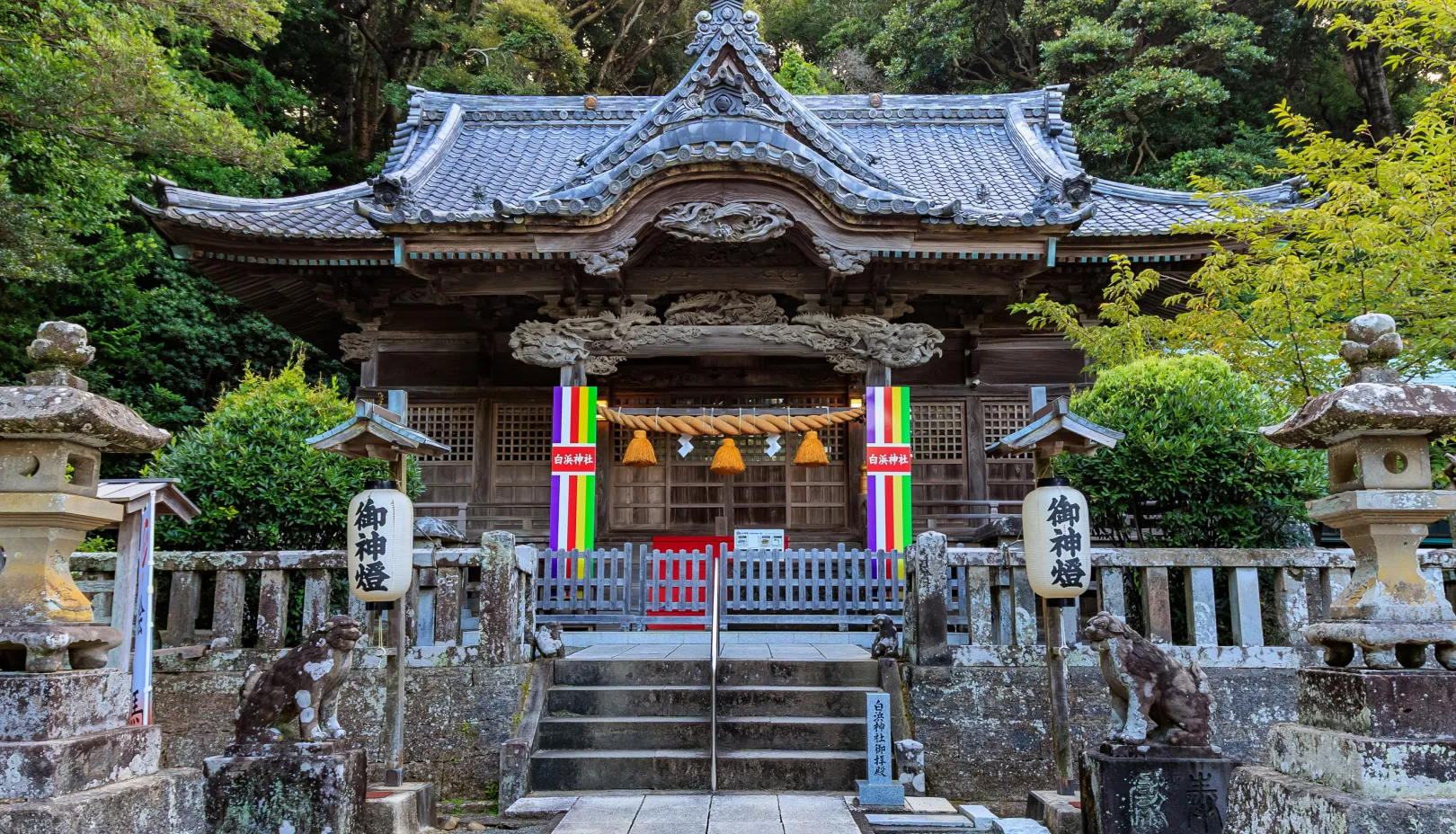
▲From PIXTA: "The main hall of Shirahama Shrine, Izu's oldest shrine"
Ikonahime-jinja Shrine (Shirahama Shrine) sits on Shirahama Beach in Shimoda City, Shizuoka Prefecture, and is Izu's oldest shrine, with a history of more than 2,400 years since its founding.
Its official name is Ikonahime-jinja Shrine, but it is affectionately known by locals and visitors alike by its common name, Shirahama Shrine.
Having watched over the Izu region throughout its long history, the shrine is home to numerous cultural properties, including the "Byakushin Grove," designated a national natural monument.
Step into the solemn grounds surrounded by deep greenery, and you can feel the quiet, sacred air, as if 2,400 years of prayers have soaked into the very ground.Ikonahime-jinja Shrine (Shirahama Shrine)
- Address
- 2740 Shirahama, Shimoda-shi, Shizuoka 415-0012
- Visiting Hours
- Grounds open anytime (Shrine office: approx. 9:00A.M.–4:00P.M.)
- Admission
- Free
-
-
The bond formed by the husband-and-wife deities
2 A Powerful Deity for Relationships and Marital Harmony
-
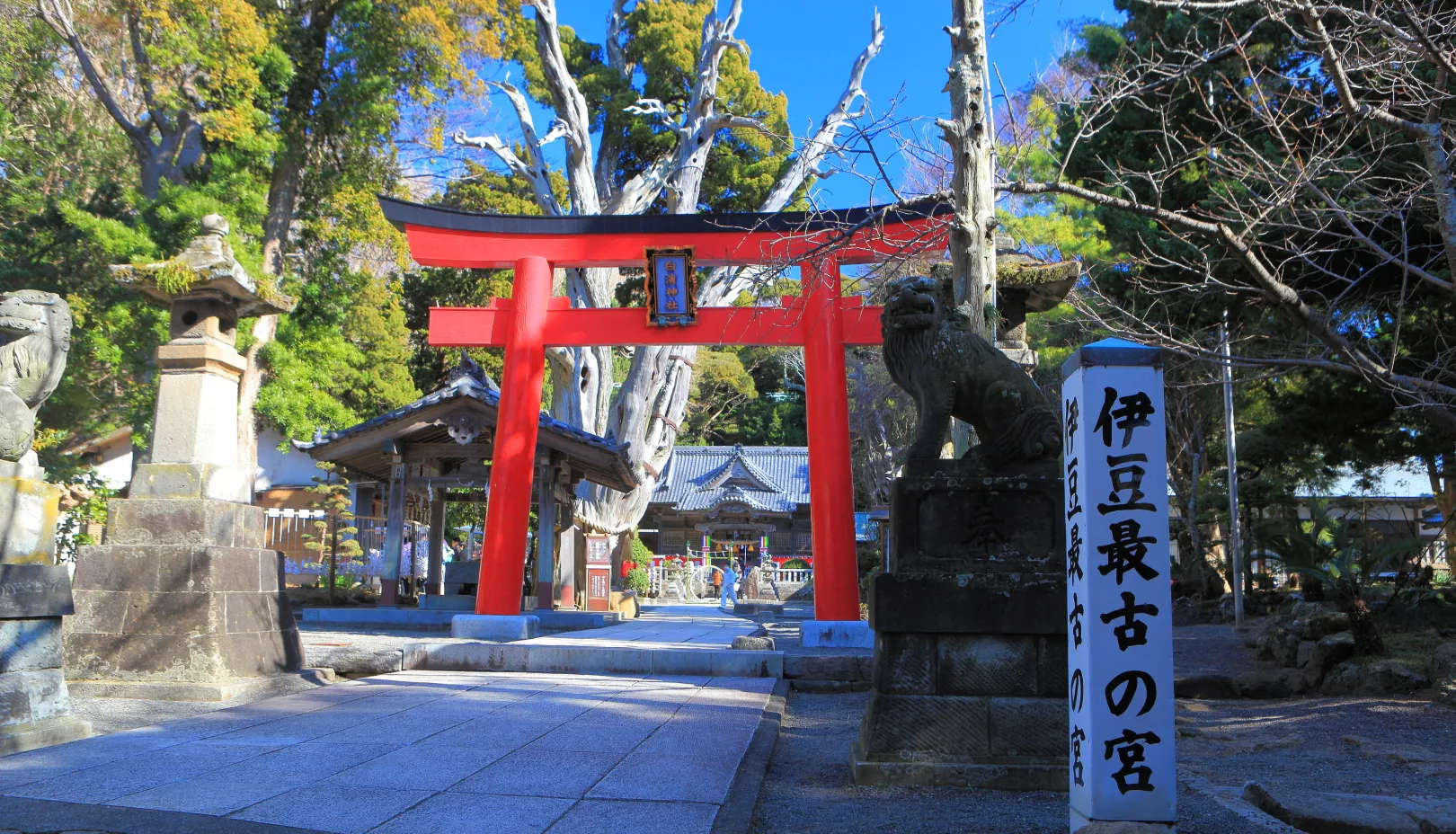
▲"The great torii gate of Shirahama Shrine, inscribed with 'Izu's Oldest Shrine'"
Ikonahime-jinja Shrine (Shirahama Shrine) enshrines five deities: Ikonahime-no-Mikoto, Mishima-Daimyojin, Mime, Wakamiya, and Tsurugi-no-Miko.
The principal deity, Ikonahime-no-Mikoto, is the consort of Mishima-Daimyojin.
She is deeply revered as a deity of matchmaking, conception, and child-rearing.
Mishima-Daimyojin is known as a deity who brings prosperity, and because the shrine enshrines this husband-and-wife pair of deities, it is also said to bless visitors with marital harmony.
It is a power spot visited not only by couples and married partners, but also by many who wish for good new relationships.
Amulets and goshuin (shrine seals) for good relationships are also available at the shrine, making them wonderful gifts for someone special. -
-
A giant tree that has carried 2,000 years of life
3 The 2,000-Year-Old Sacred Tree, "Yakushi no Byakushin"
-
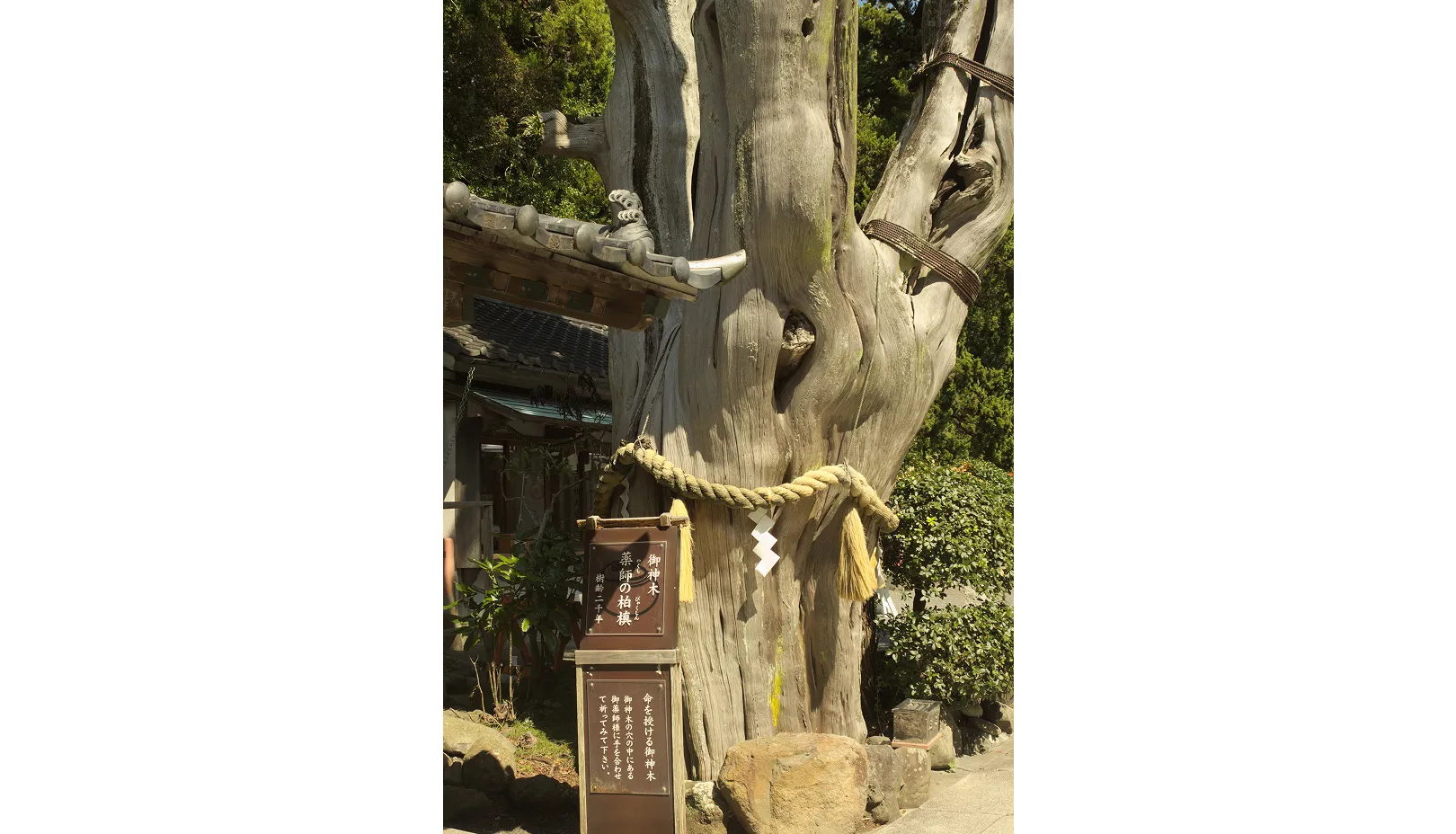
▲From PIXTA: "The 2,000-year-old sacred tree, Yakushi no Byakushin"
One of the most striking presences on the grounds is the sacred tree "Yakushi no Byakushin" (Japanese juniper).
Estimated to be around 2,000 years old, it is a mysterious giant tree that is still alive today.
Another Japanese juniper on the grounds, called the "Byakushin of the White Dragon," is said to have lived for 1,000 years and remained standing for another 1,300 years after its death.
This grove of sacred junipers is designated a national natural monument, a precious piece of natural heritage that tells the story of the shrine's long history.
Standing before these sacred trees, you can feel on your skin the extraordinary presence they have taken on over so many years.
The sheer presence of this 2,000-year-old giant is more powerful than any photograph can convey. -
-
The Appeal of Ikonahime-jinja Shrine (Shirahama Shrine)
as a Power Spot
-
Love, marriage, work, family — every bond is welcomed here
4 Said to Bless All Kinds of Relationships
-
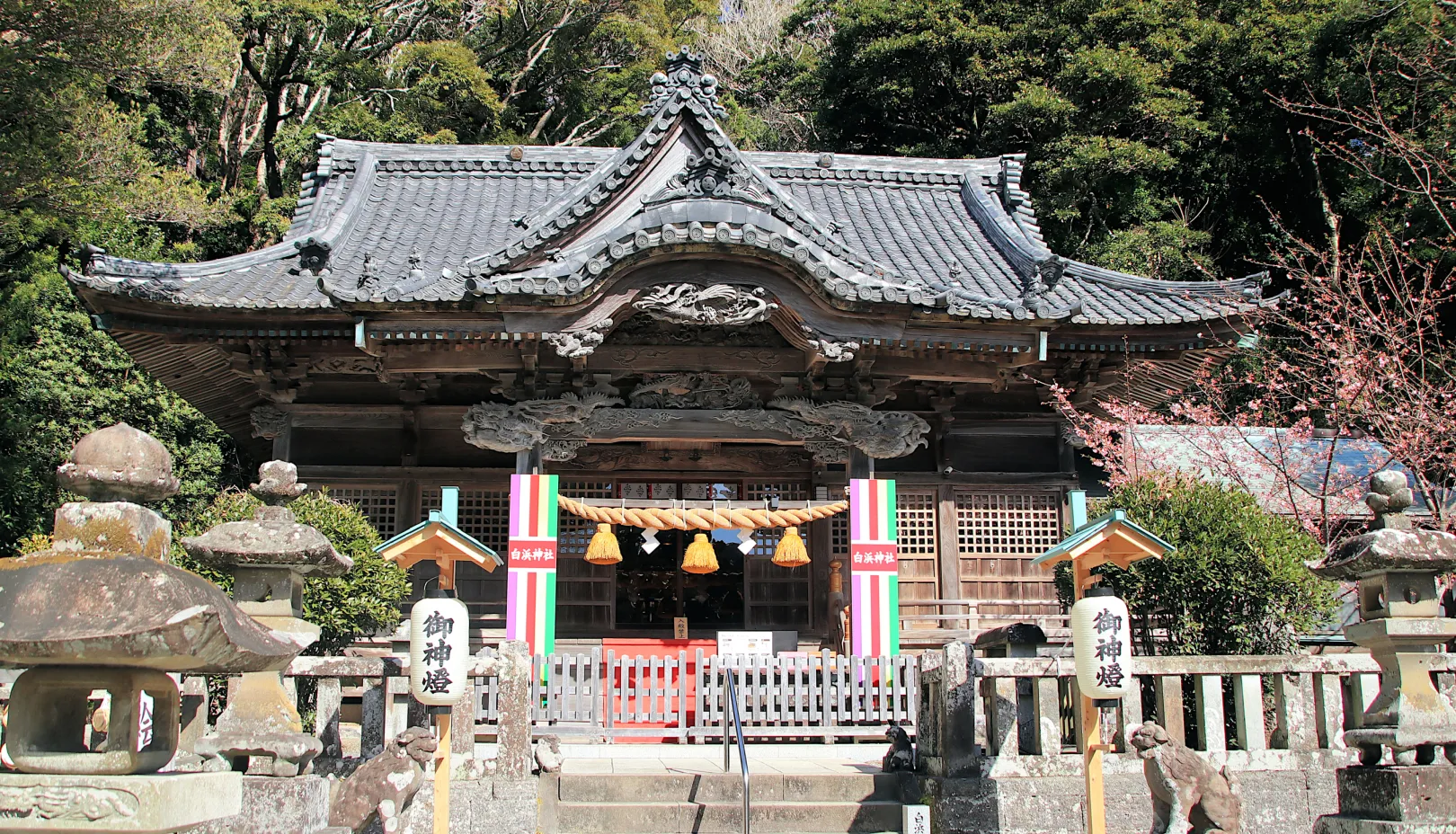
▲From PIXTA: "The main hall of Ikonahime-jinja Shrine (Shirahama Shrine) in springtime bloom"
Ikonahime-jinja Shrine is a power spot said to offer blessings for a wide range of relationships.
"Good relationships" here go beyond romance and marriage: many visitors come seeking blessings for career connections, friendships, and family bonds of every kind.
The principal deity, Ikonahime-no-Mikoto, is deeply revered as a deity of good relationships, and the story of her marriage to Mishima-Daimyojin has long been passed down as a symbol of matchmaking.
It's a wonderful spot to visit for anyone who values human connection or is hoping for new bonds in their life. -
-
A goddess of beauty and connection watches over the grounds
5 Home to Mime Benzaiten, Deity of Good Relationships
-
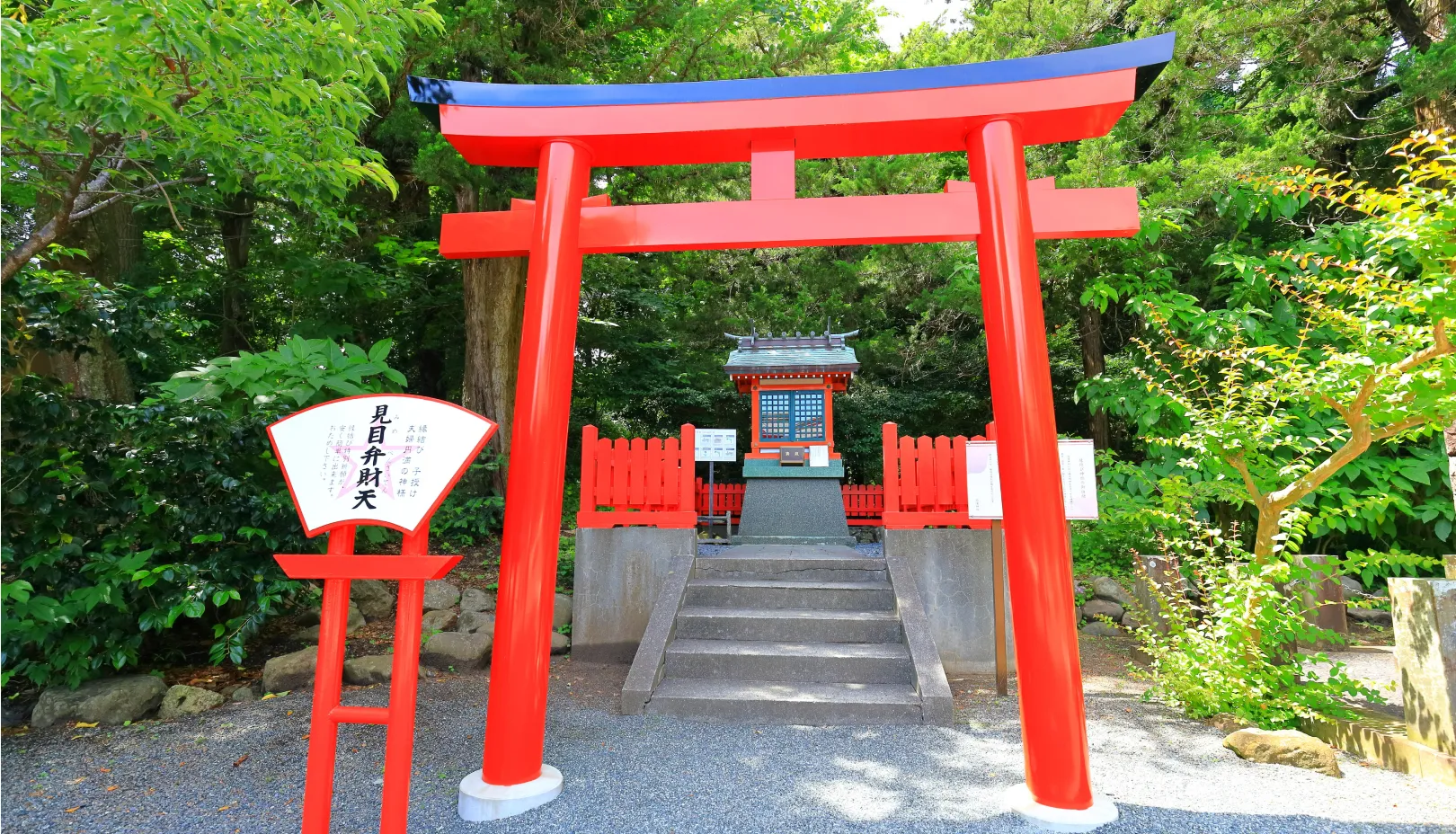
▲From PIXTA: "The torii gate of Mime Benzaiten, deity of good relationships"
Within the grounds stands "Mime Benzaiten," a deity known for blessing good relationships.
Mime is one of the five enshrined deities and is revered as a deity of the arts, beauty, and matchmaking.
Benzaiten is associated with water, beauty, and good relationships, and is especially revered by those hoping for good fortune in love.
After paying your respects at the main hall, be sure to stroll the grounds and visit Mime Benzaiten as well.
It's one of the grounds' most popular power spots, drawing many visitors hoping for beautiful new connections. -
-
A breathtaking view where blue sea meets a vermilion torii gate
6 Take In the Breathtaking Views of Shirahama Beach
-
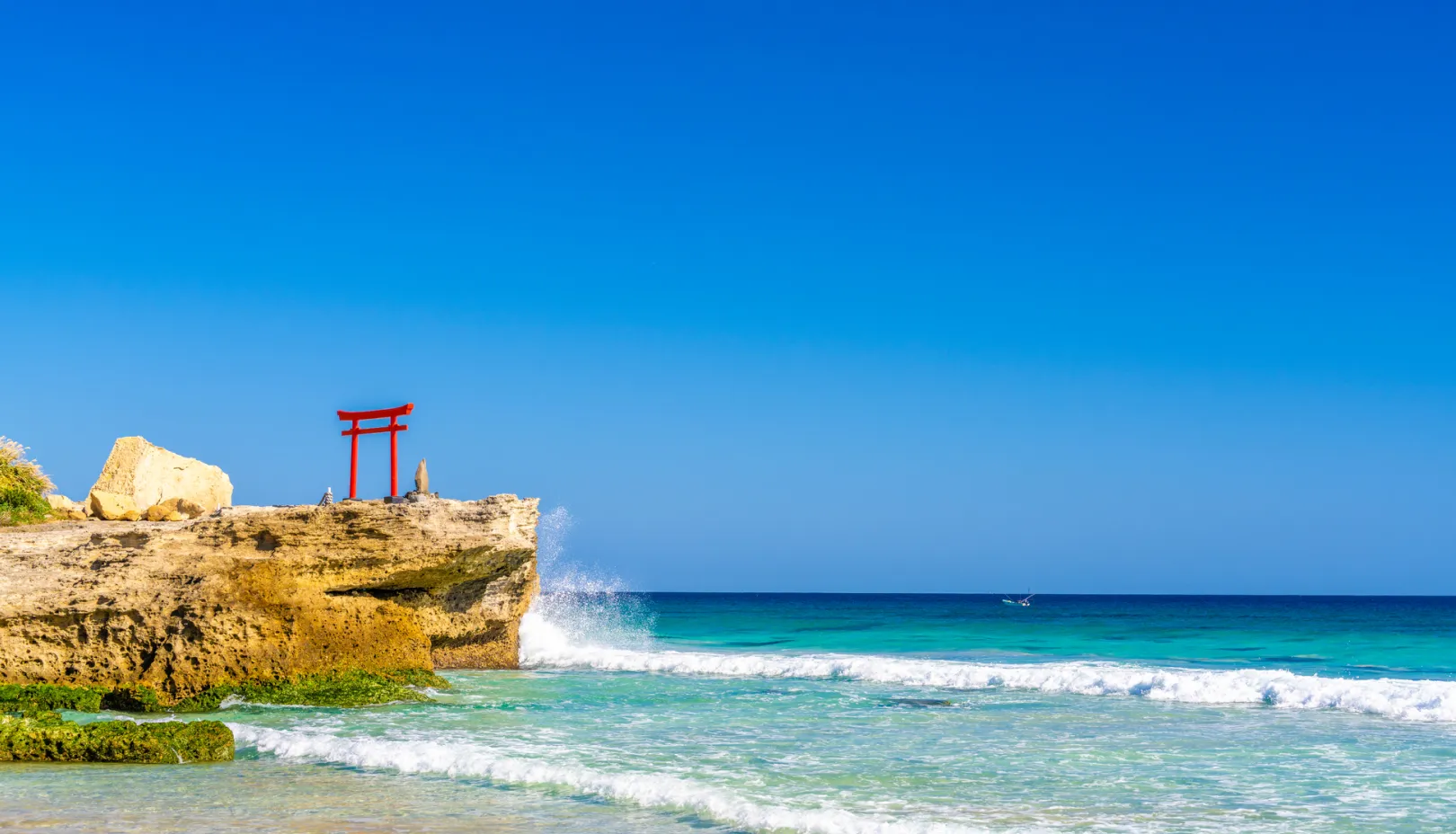
▲From PIXTA: "The vermilion torii gate standing on Daimyojin Rock at Shirahama Beach"
One of the biggest highlights of Ikonahime-jinja Shrine is Shirahama Beach, which stretches out right behind the grounds, along with the vermilion torii gate standing on the rocks.
Follow the path behind the grounds and you'll come out onto Shirahama Beach, where a vivid vermilion torii gate appears atop Daimyojin Rock to your left.
The combination of the blue sea, white sand, and vermilion torii gate creates a view found nowhere else.
During spring tides, tide pools called "Okama" appear around the rocks, revealing a mysterious sight unlike the ordinary view.
On clear days when you can see all the way to the Izu Seven Islands, the view is truly breathtaking. -
-
Ancient energy, gathered through countless prayers
7 2,400 Years of Prayer and Energy Have Accumulated Here
-
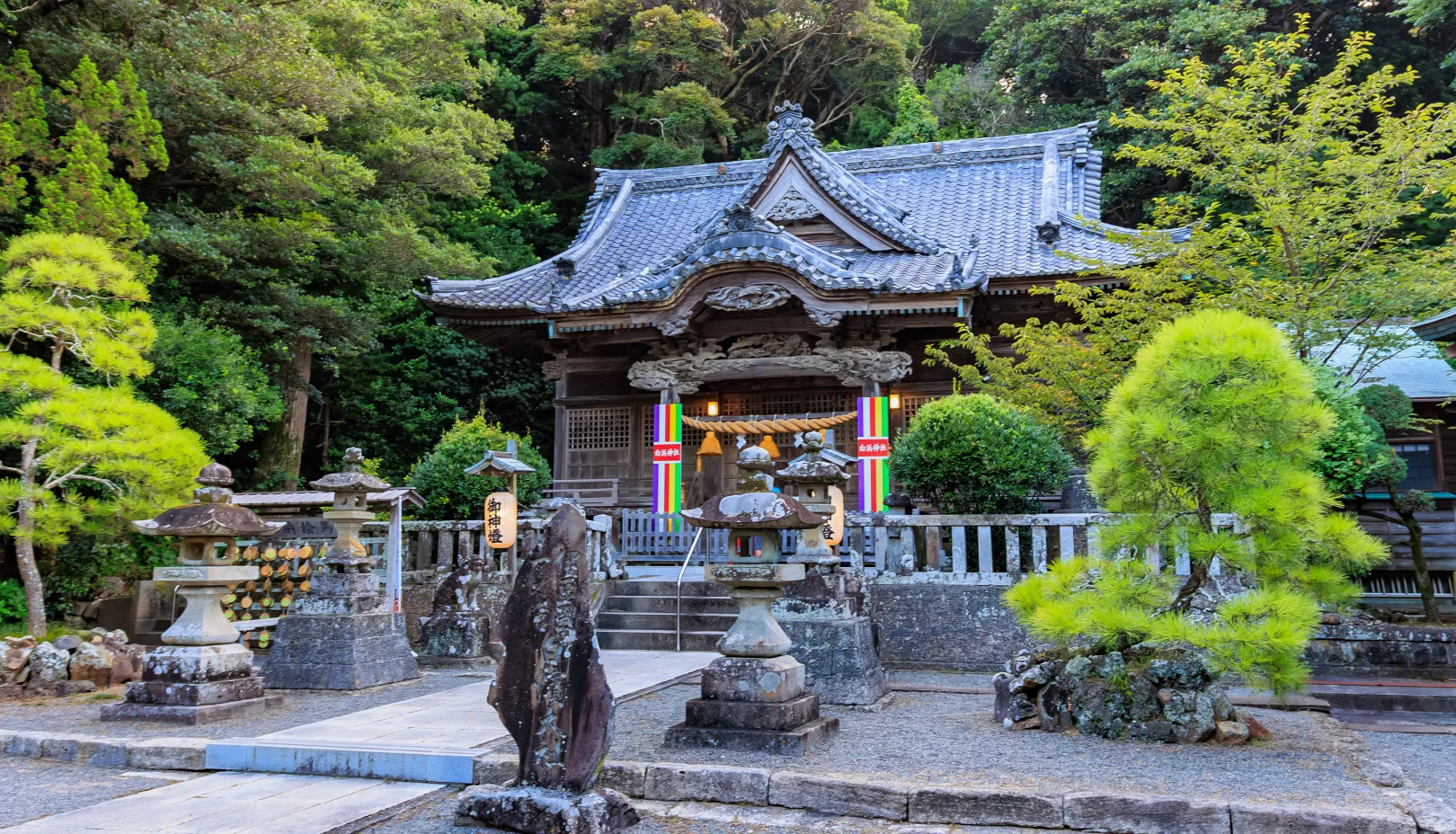
▲From PIXTA: "The quiet grounds of Ikonahime-jinja Shrine (Shirahama Shrine), wrapped in deep greenery"
Ikonahime-jinja Shrine, visited continuously by worshippers for more than 2,400 years, is said to hold the energy of prayer accumulated over its long history.
The Izu Peninsula is a land of dynamic terrain and rich nature, shaped by the collision of tectonic plates.
Since the shrine was first established at Shirahama, the special environment surrounded by sea and mountains is said to have nurtured its sacred power.
Why not spend a moment away from the bustle of daily life, immersed in a place of prayer that has continued since ancient times?
The stillness that fills the grounds, along with the sound of the sea breeze, will gently cleanse the hearts of all who visit. -
-
More Power Spots
Sightseeing Spots in Shimoda to Visit With Ikonahime-jinja Shrine
-
From protecting women to blessing good relationships
1 Mt. Nesugata
-
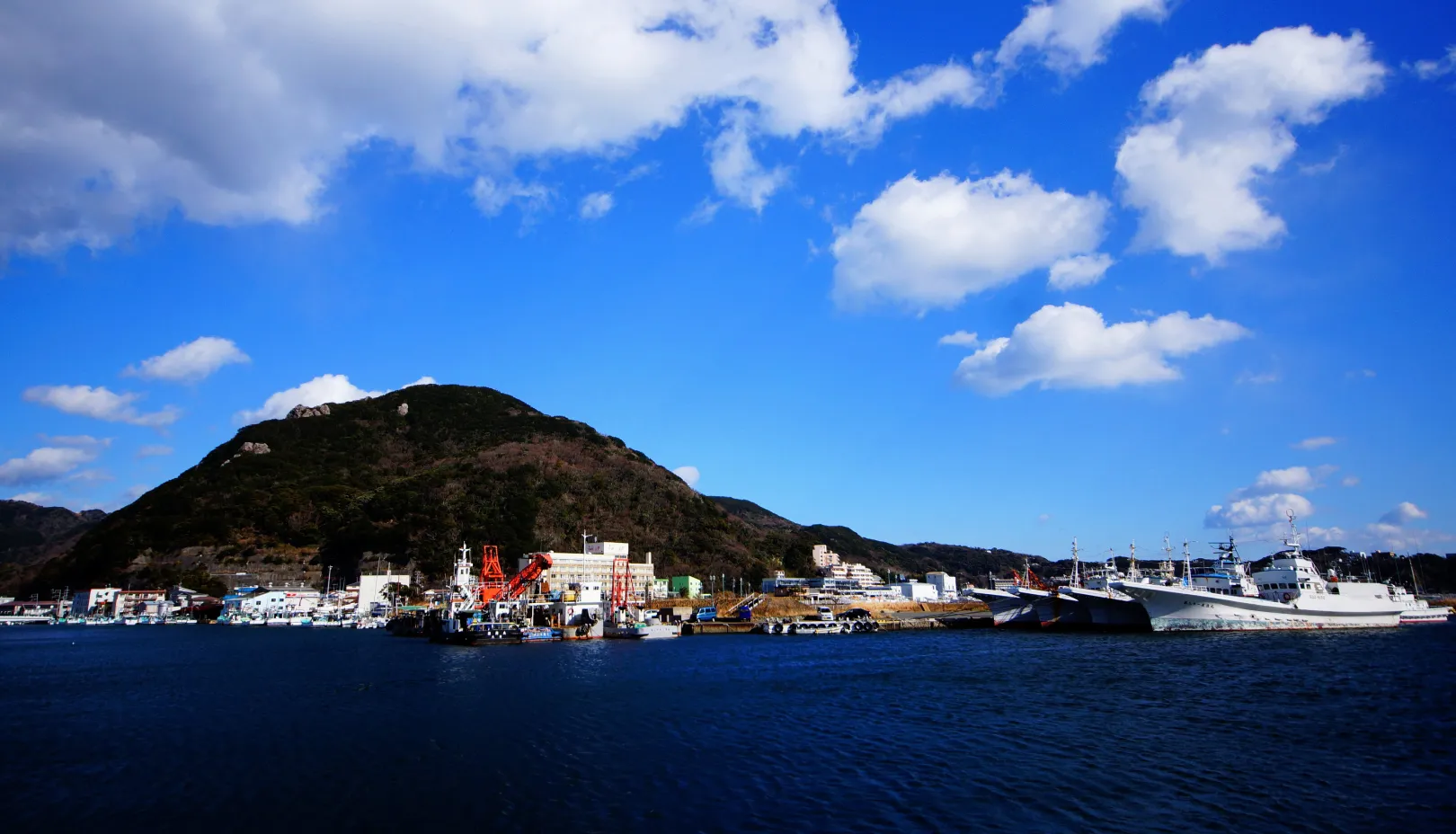
▲From PIXTA: "Shimoda Port and the Izu mountains, seen from the foot of Mt. Nesugata"
"Mt. Nesugata" gets its name from the way it appears to resemble a reclining woman when viewed from downtown Shimoda.
The Shimoda Ropeway takes you to the summit in about 3 minutes under normal conditions, where you can enjoy sweeping views over downtown Shimoda and the Izu Seven Islands.
At the summit stands "Aizen-do Hall," home to the deity Aizen-myoo.
Revered as a protector of women and a deity of good relationships, the hall draws many visitors praying for successful romance.
The summit also has the former Black Ships lookout site and an observation deck, making it a rewarding spot where you can enjoy shrine visits, scenery, and history all at once.Mt. Nesugata
- Address
- Kakizaki, Shimoda-shi, Shizuoka 415-0013
- Operating Hours
- 9:00A.M.–5:00P.M. (last ride up 4:45P.M.; hours vary by season)
- Fare
- Adults (junior high school age and up): ¥1,500; Children (elementary school age): ¥750
※Round-trip fare
-
-
A power spot said to strengthen personal connections
2 Ryosenji Temple
-
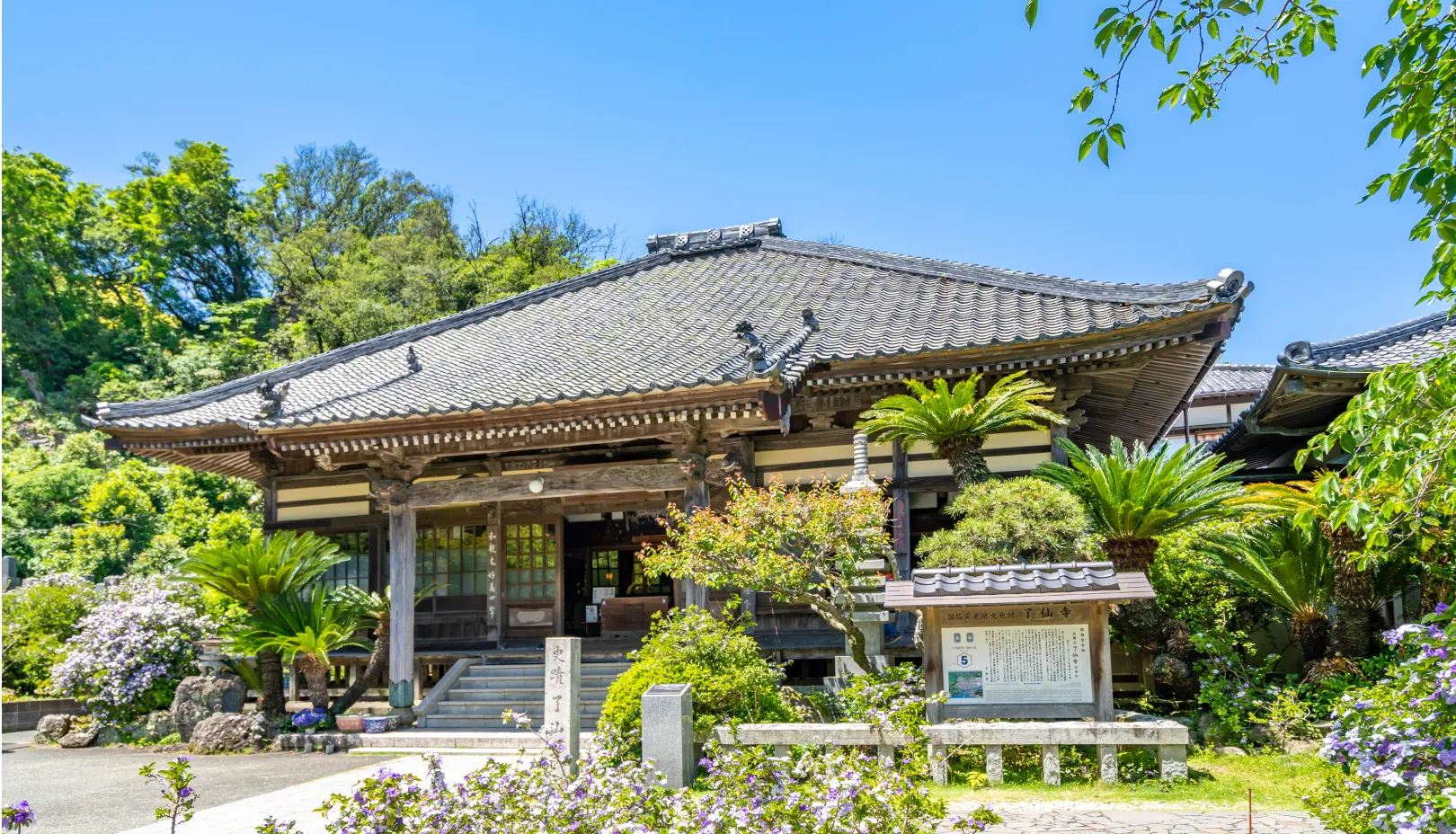
▲From PIXTA: "The main hall of Ryosenji Temple, surrounded by greenery"
"Ryosenji Temple" is a Soto Zen temple in Shimoda, historically significant as the site where the detailed rules of the Treaty of Amity between the U.S. and Japan (the Shimoda Treaty) were signed in 1854.
The temple is also famous for its fields of bee balm (monarda) in full bloom, drawing many visitors during flowering season.
In addition, the grounds are cherished as a power spot said to bless "bonds between people," and many visitors come to pray for good relationships and stronger connections.
"Perry Road," adjacent to the temple grounds, is one of Shimoda's signature sightseeing areas, where you can stroll while sensing the history of Japan's opening to the world in the late Edo period. Be sure to explore it together with Ryosenji Temple.Ryosenji Temple
- Address
- 3-chome 12-12, Shimoda-shi, Shizuoka 415-0023
- Visiting Hours
- 8:00A.M.–5:00P.M.
- Admission
- Free to enter the grounds
※MoBS Black Ship Museum requires a separate admission fee
-
-
A "heart-shaped" view that appears when you look down from above
3 Ryuguu Cave
-
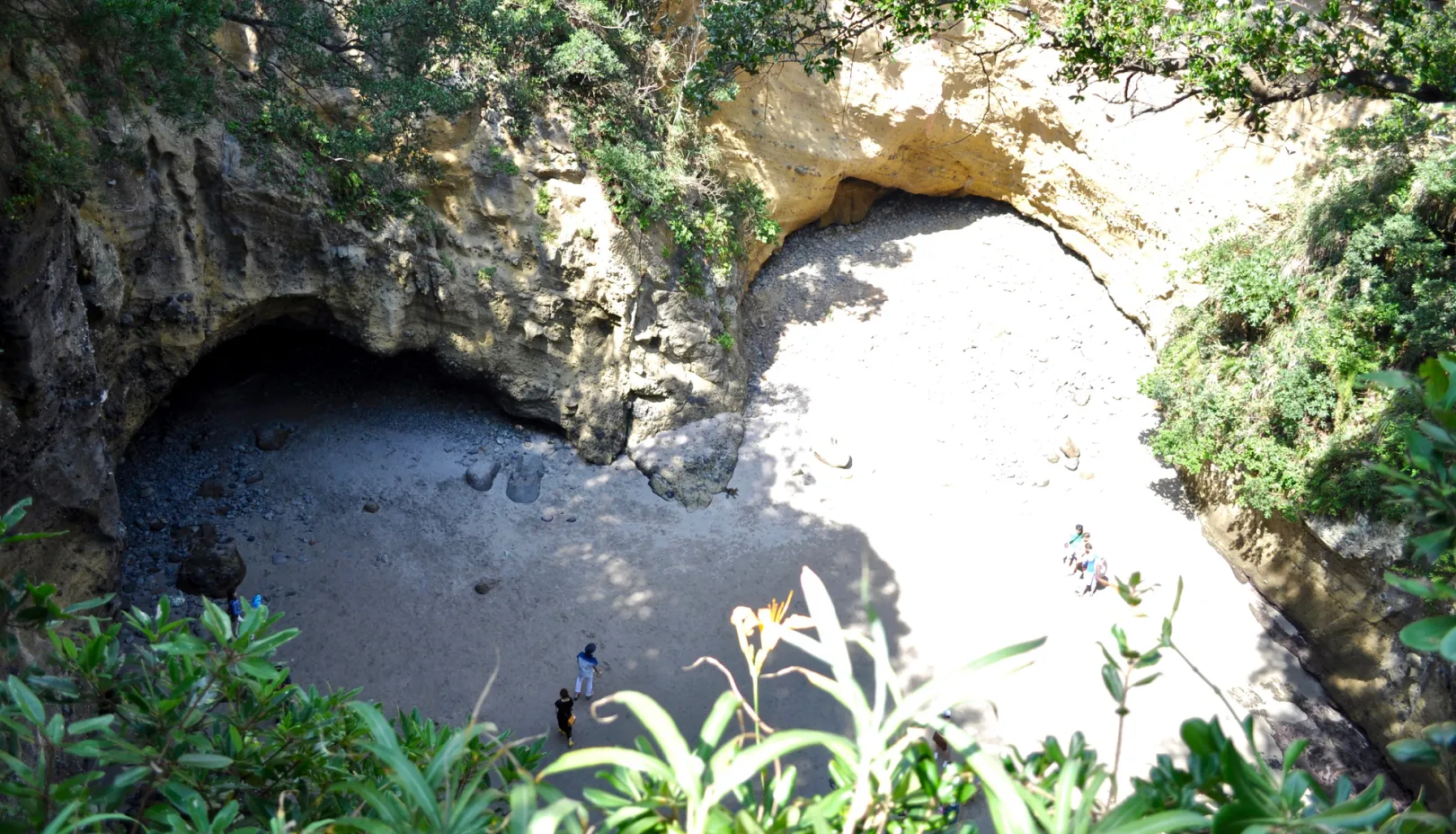
▲From PIXTA: "The heart-shaped view of Ryuguu Cave, seen from above"
-
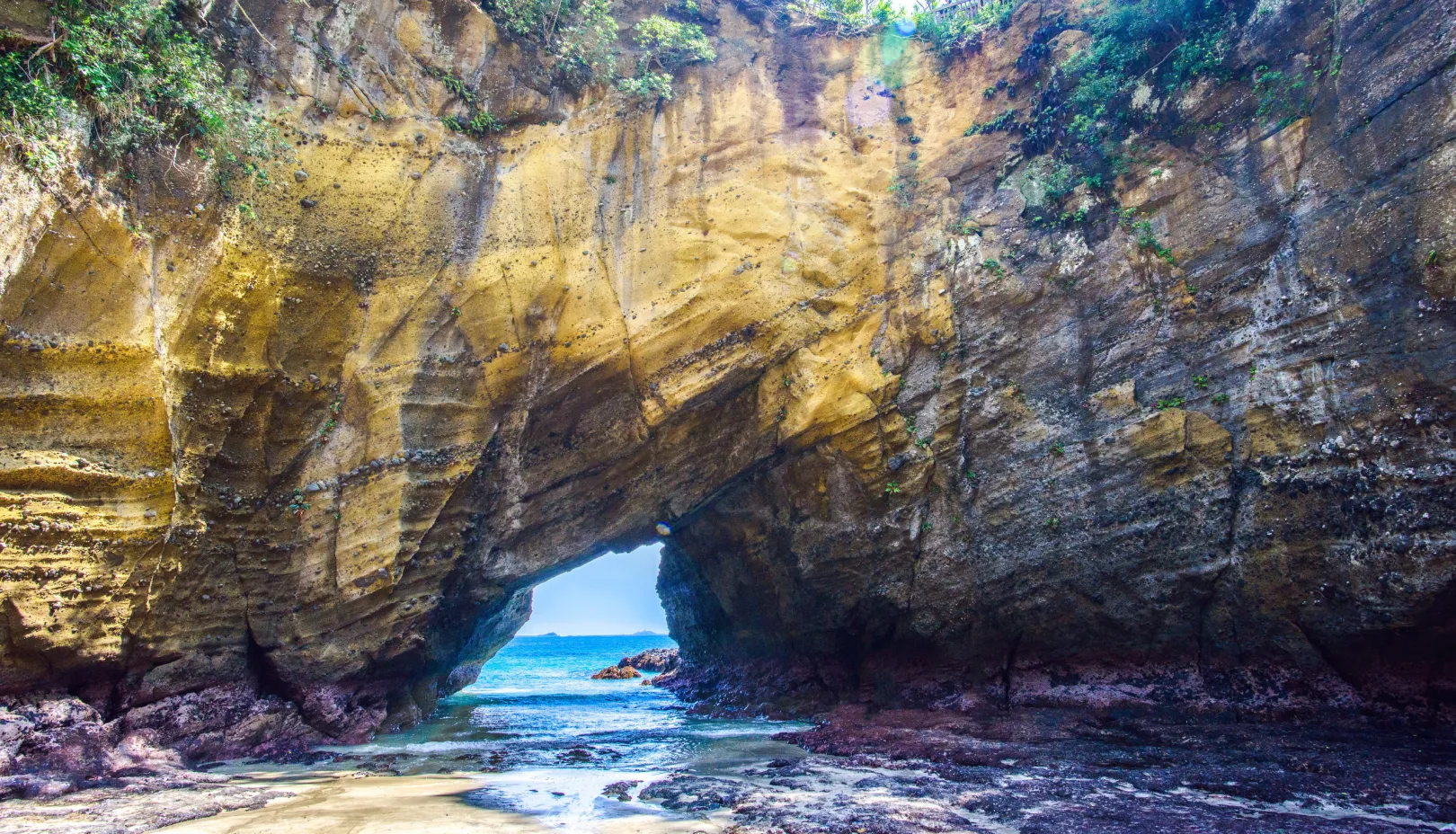
▲From photoAC: "The arch of Ryuguu Cave leading out to the sea, viewed from inside the cave"
"Ryuguu Cave" is a sea cave in the Toji area of Shimoda City.
The collapsed ceiling of the cave has formed a dome shape that appears heart-shaped when viewed from above, earning it a reputation as a "power spot for love."
Walk the promenade inside the cave to enjoy the light streaming through the opening in the ceiling, the sheer rock walls, and the stunning blue sea beyond.
A route is also in place for viewing the heart-shaped cave from above, making it a great spot to visit with a partner or spouse.Ryuguu Cave
- Address
- Toji, Shimoda-shi, Shizuoka 415-0029
- Operating Hours
- Open anytime
- Admission
- Free
-
-
A natural sand slope shaped by sea winds
4 Toji Sand Dune Ski Area
-
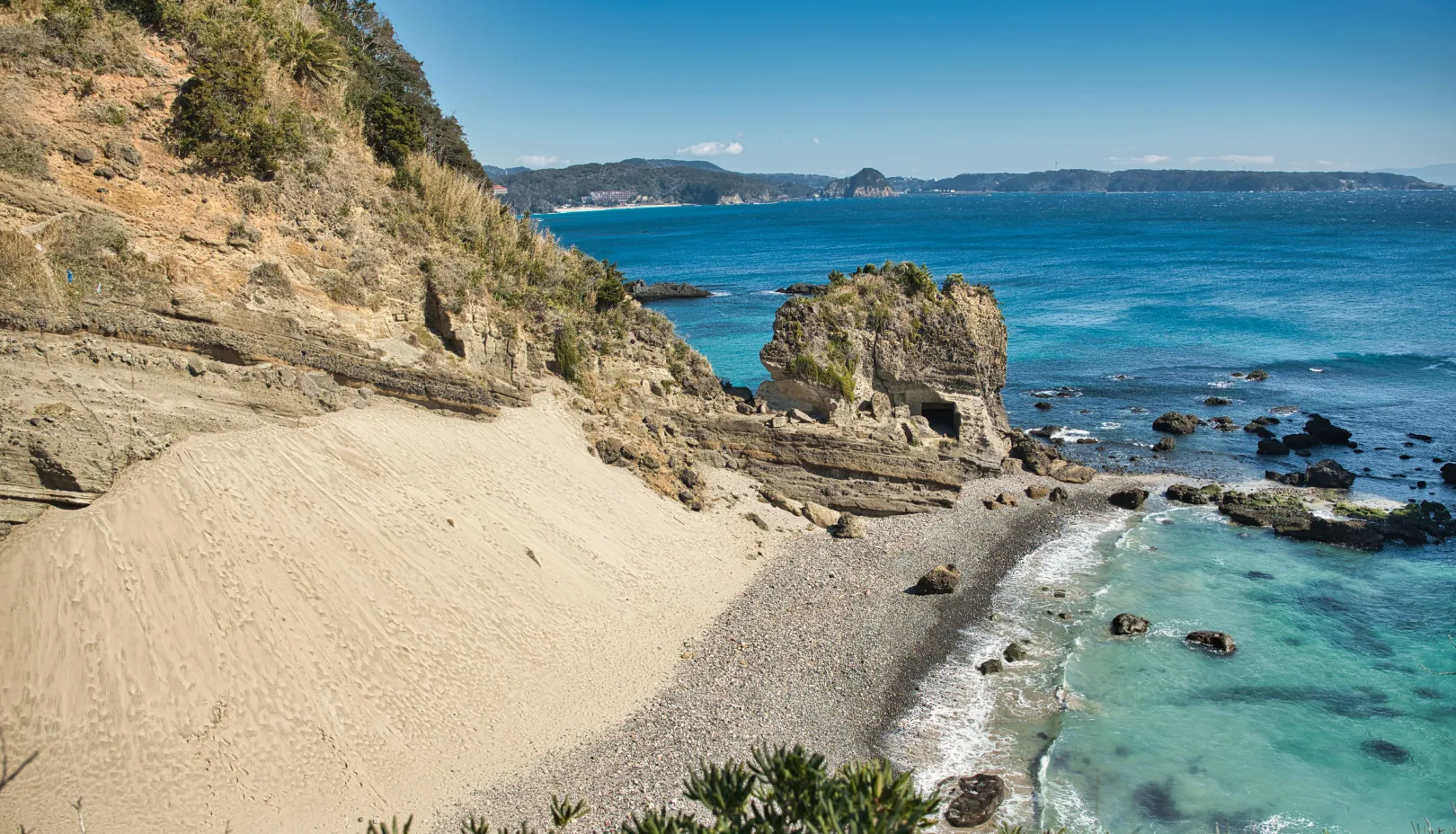
▲From photoAC: "The sand slope of Toji Sand Dune Ski Area, leading to the blue sea"
Just steps from Ryuguu Cave, "Toji Sand Dune Ski Area" is a natural sand slope formed over many years by sand blown up by sea winds.
Here you can enjoy "sand sledding" down the slope using dedicated sleds or boards. It's an activity for all ages, and a popular spot for a rare natural-dune experience.
Combine it with a visit to Ryuguu Cave to spend a full day enjoying the Toji area. It's about a 20-minute drive from Ikonahime-jinja Shrine under normal conditions.Toji Sand Dune Ski Area
- Address
- Toji, Shimoda-shi, Shizuoka 415-0029
- Operating Hours
- Open anytime
- Admission
- Free
※Sled and board rentals require a separate fee
-
-
A lighthouse framed by 3 million wild narcissus
5 Cape Tsumeki
-
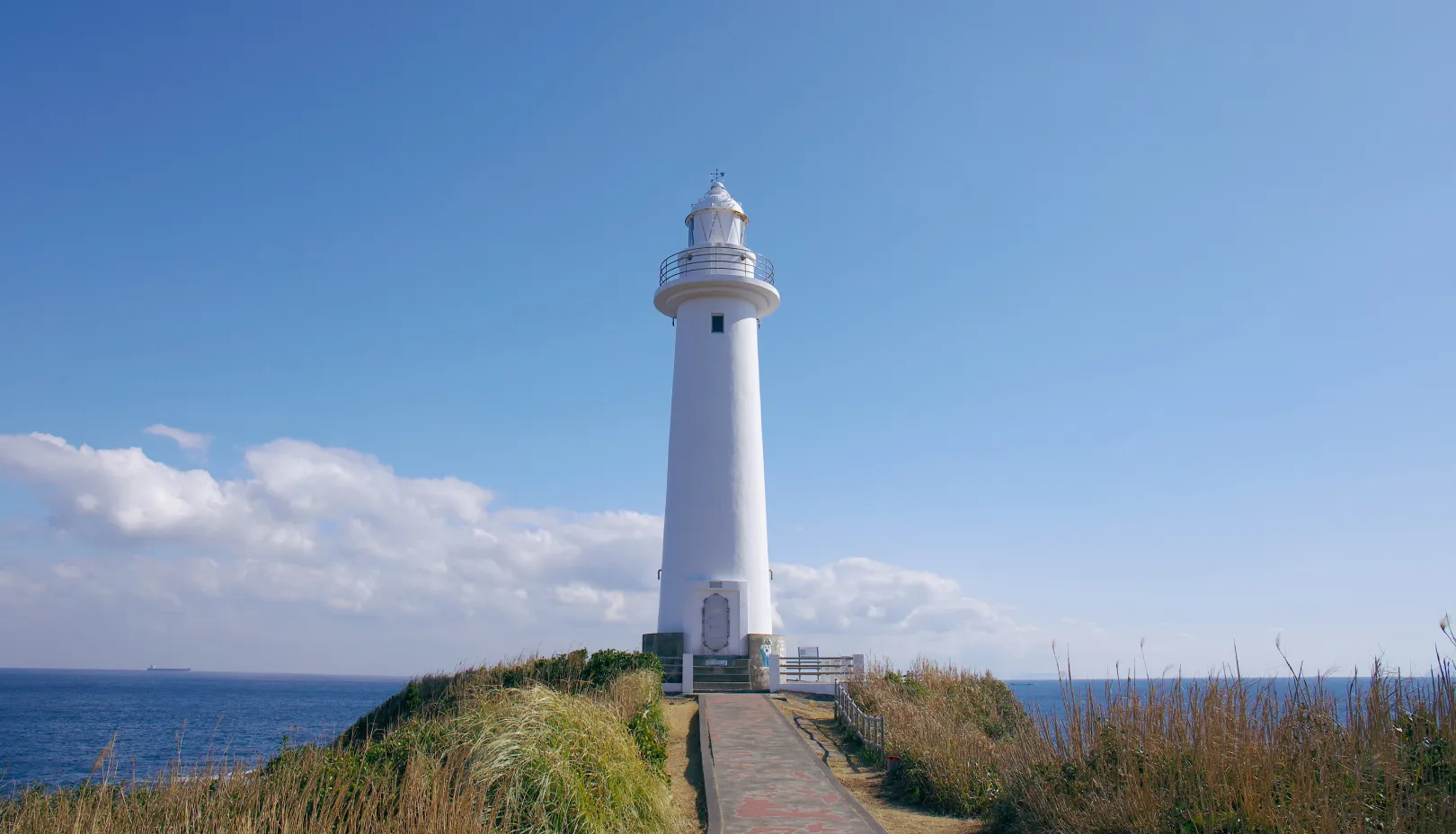
▲From PIXTA: "The white lighthouse standing at Cape Tsumeki"
"Cape Tsumeki" is a headland at the tip of the Susaki Peninsula in Shimoda City. It's known for the roughly 3 million wild narcissus that bloom all at once every year from late December through January, when the "Tsumekizaki Nature Park Narcissus Festival" is held.
Tsumekizaki Lighthouse stands at the tip of the cape, offering sweeping views over the Pacific Ocean. The contrast of the white lighthouse, blooming wild narcissus, and blue sea is one of the signature winter views of Shimoda.
In summer, the area is also a bustling swimming beach, offering a different atmosphere throughout the seasons.Cape Tsumeki
- Address
- Susaki, Shimoda-shi, Shizuoka 415-0014
- Operating Hours
- Open anytime
- Admission
- Free
※A cooperation fee applies during the Narcissus Festival
-
-
A scenic spot for sightseeing and spiritual visits alike
6 Shimoda Ropeway
-
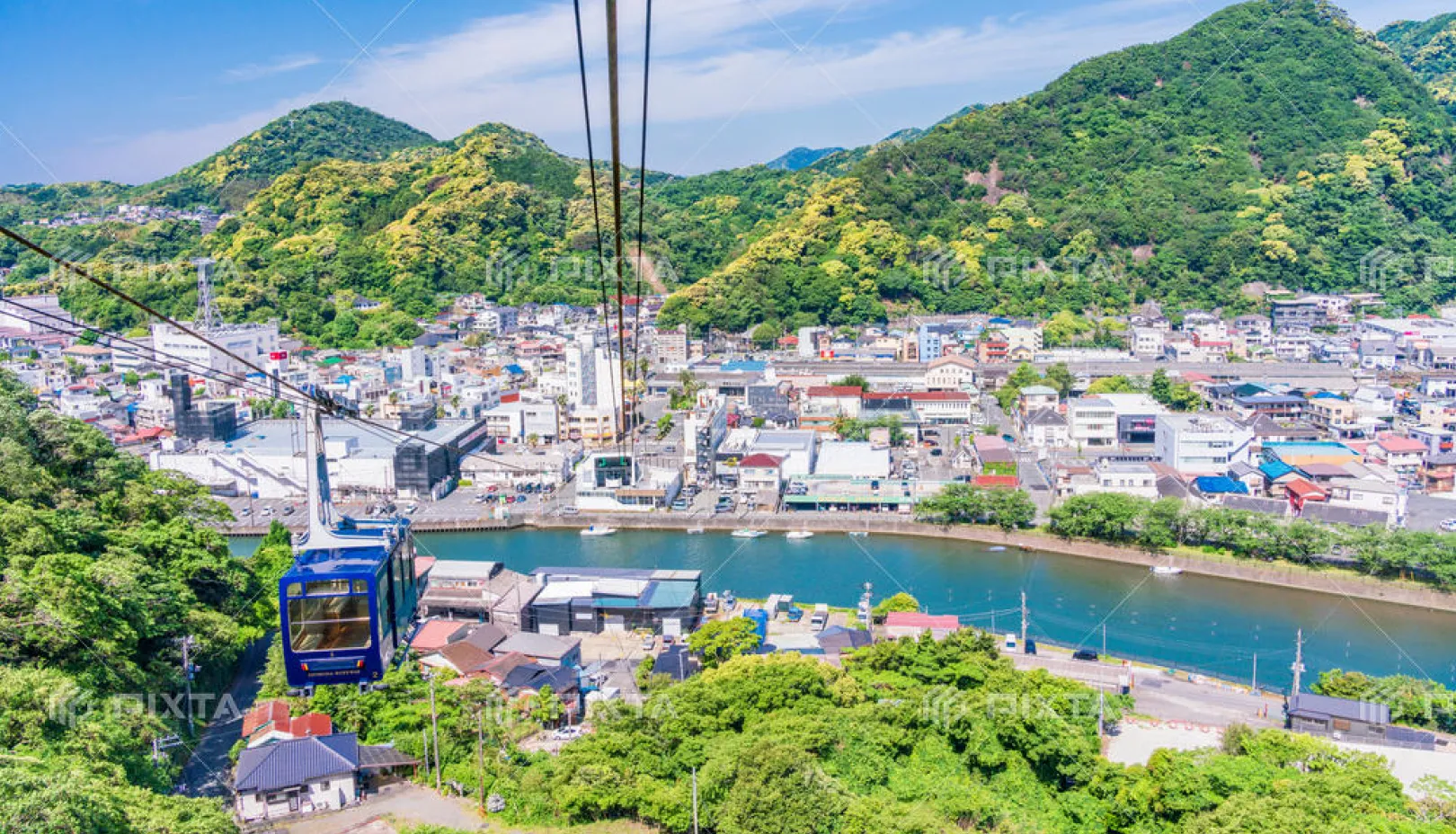
▲From PIXTA: "The view of downtown Shimoda from the Shimoda Ropeway"
The "Shimoda Ropeway" connects downtown Shimoda with the summit of Mt. Nesugata. In about a 3-minute ride through the air, you'll take in sweeping views of downtown Shimoda, Shimoda Port, and the Izu Seven Islands.
The summit is also home to Aizen-do Hall, dedicated to the deity of good relationships, along with an observation deck and the former Black Ships lookout site, making it a popular spot for both scenery and spirituality.
On clear days, the panoramic aerial view is truly special. Be sure to visit alongside your trip to Ikonahime-jinja Shrine.Shimoda Ropeway (Mt. Nesugata)
- Address
- 831 Naka, Shimoda-shi, Shizuoka 415-0016
- Operating Hours
- 9:00A.M.–5:00P.M. (last ride up 4:45P.M.; hours vary by season)
- Fare
- Adults (junior high school age and up): ¥1,500
Children (elementary school age): ¥750 ※Round-trip fare
-
-
Home to one of Japan's top hydrangea festivals
7 Shimoda Park
-
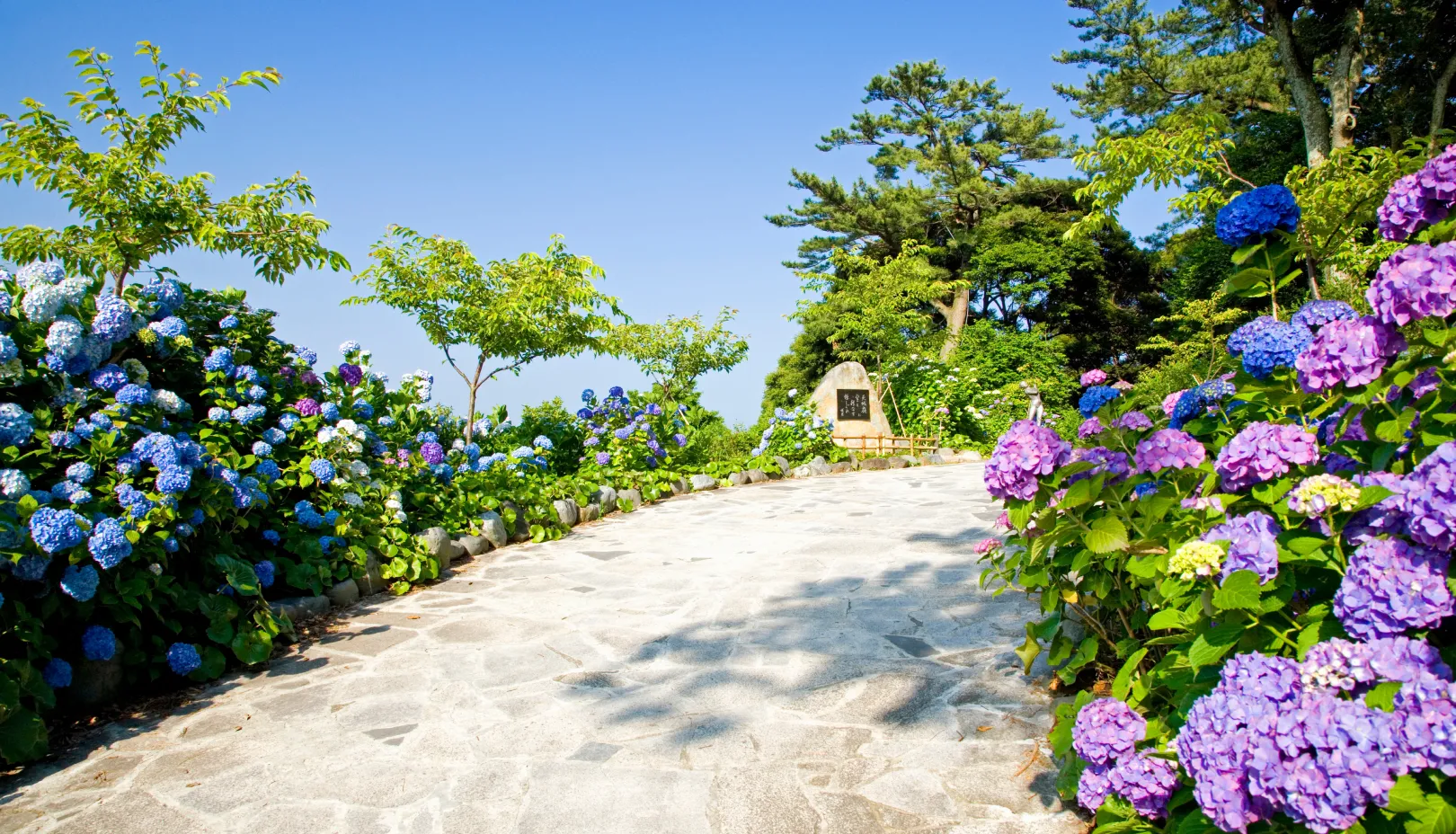
▲From Adobe Stock: "Hydrangeas in full bloom at Shimoda Park"
"Shimoda Park" is a park spread across a hill overlooking Shimoda Port.
Every June, the "Izu Shimoda Onsen Hydrangea Festival" is held, when roughly 150,000 hydrangeas planted throughout the park bloom in a rainbow of colors.
The beauty of these early-summer hydrangeas is famous across Japan, drawing large numbers of visitors.
From within the park, you can enjoy views of Shimoda Port and the blue sea alongside the hydrangeas.
Even outside of bloom season, the lush, green park is a beloved spot for a relaxing stroll among locals and visitors alike.Shimoda Park
- Address
- 3-chome 3-1174, Shimoda-shi, Shizuoka 415-0023
- Operating Hours
- Open anytime
- Admission
- Free
※A cooperation fee applies during the Hydrangea Festival
-
-
Watch dolphins swim freely in the open sea
8 Shimoda Floating Aquarium
-
▲From Adobe Stock: "Shimoda Floating Aquarium, built into the cove"
-
▲From PIXTA: "A dolphin show at Shimoda Floating Aquarium"
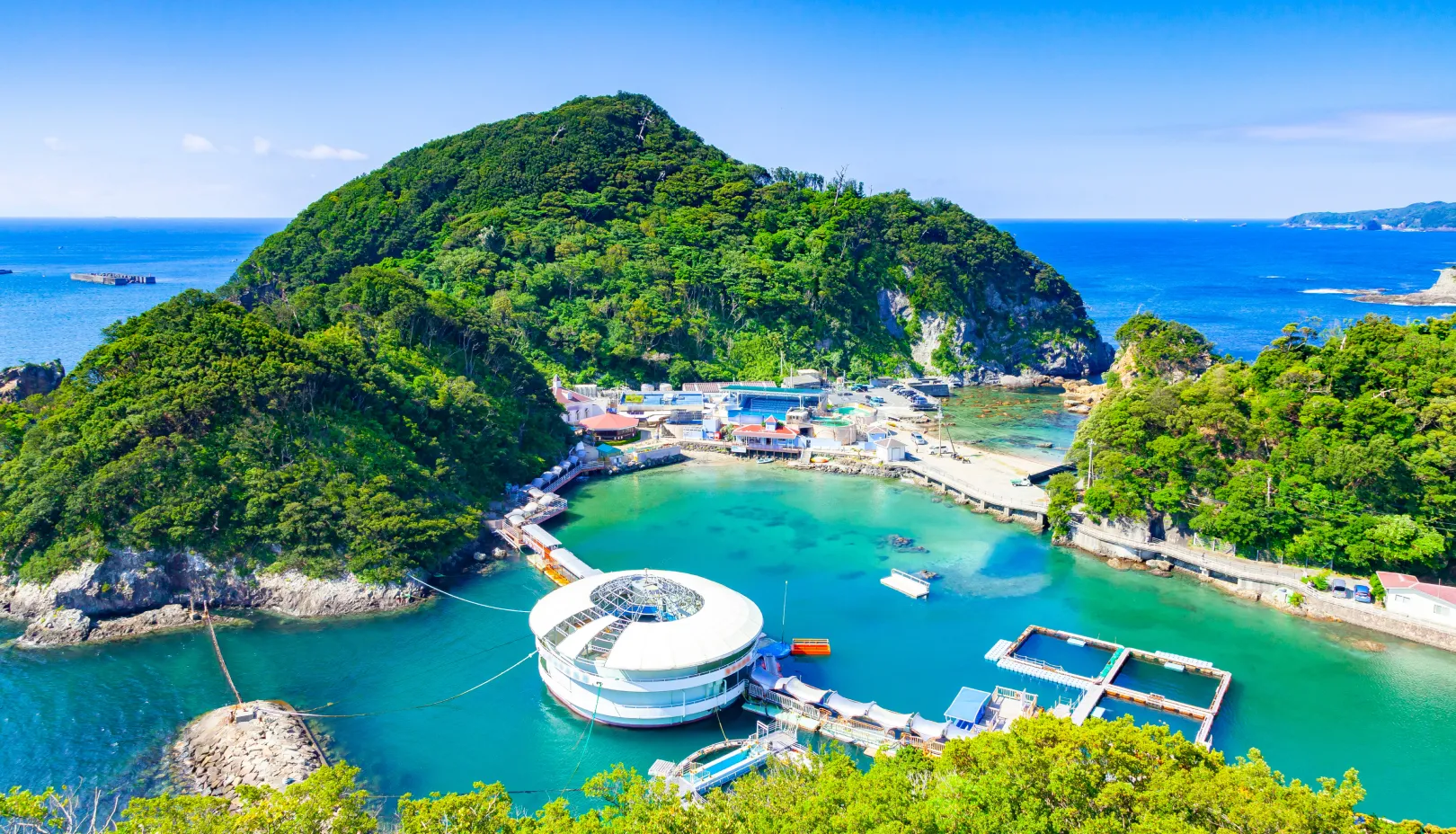
"Shimoda Floating Aquarium" sits along Nyuda Beach in Shimoda City.
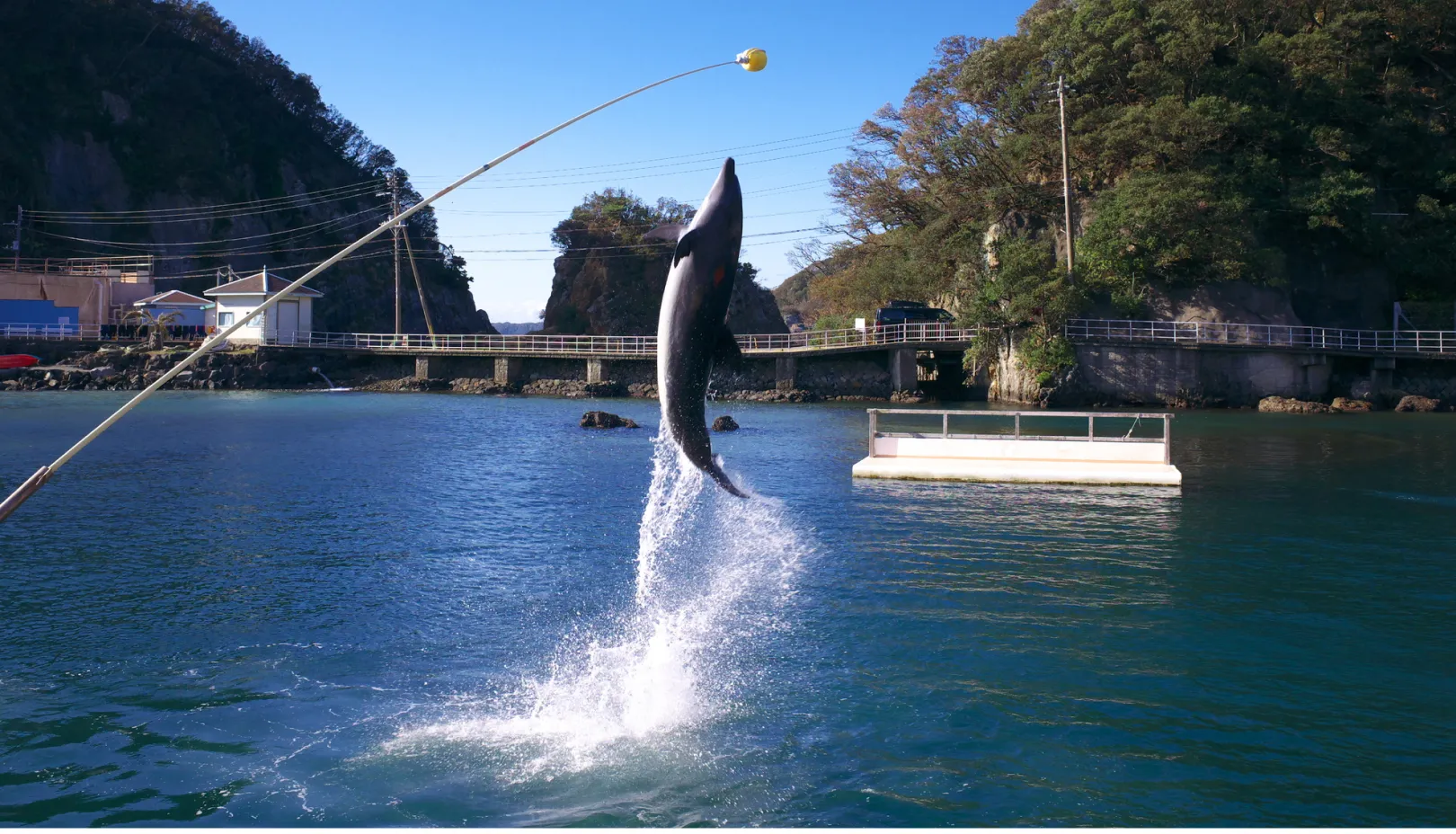
Its biggest highlight is the chance to watch dolphins swim freely up close, in enclosures set directly in the open sea.
Watching dolphins swim lively through the sea offers a sense of presence you simply can't get from an indoor tank.
Alongside dolphin shows and hands-on encounters, the aquarium also features a range of tanks showcasing tropical fish and local marine life.
It's a popular attraction in Shimoda enjoyed by families and adults alike.
Watching dolphins alongside the crystal-clear waters of Shimoda is sure to become a treasured memory of your Izu trip.Shimoda Floating Aquarium
- Address
- 3-chome 3-22-31, Shimoda-shi, Shizuoka 415-8502
- Operating Hours
- 9:00A.M.–4:30P.M. (last admission 4:00P.M.; hours vary by season)
- Admission
- Adults (junior high school age and up): ¥2,500
Children (ages 4 to elementary school age): ¥1,250
-
-
Enjoy local golden eye snapper
9 Michi-no-Eki Kaikoku Shimoda Minato
-
▲From PIXTA: "Michi-no-Eki Kaikoku Shimoda Minato"
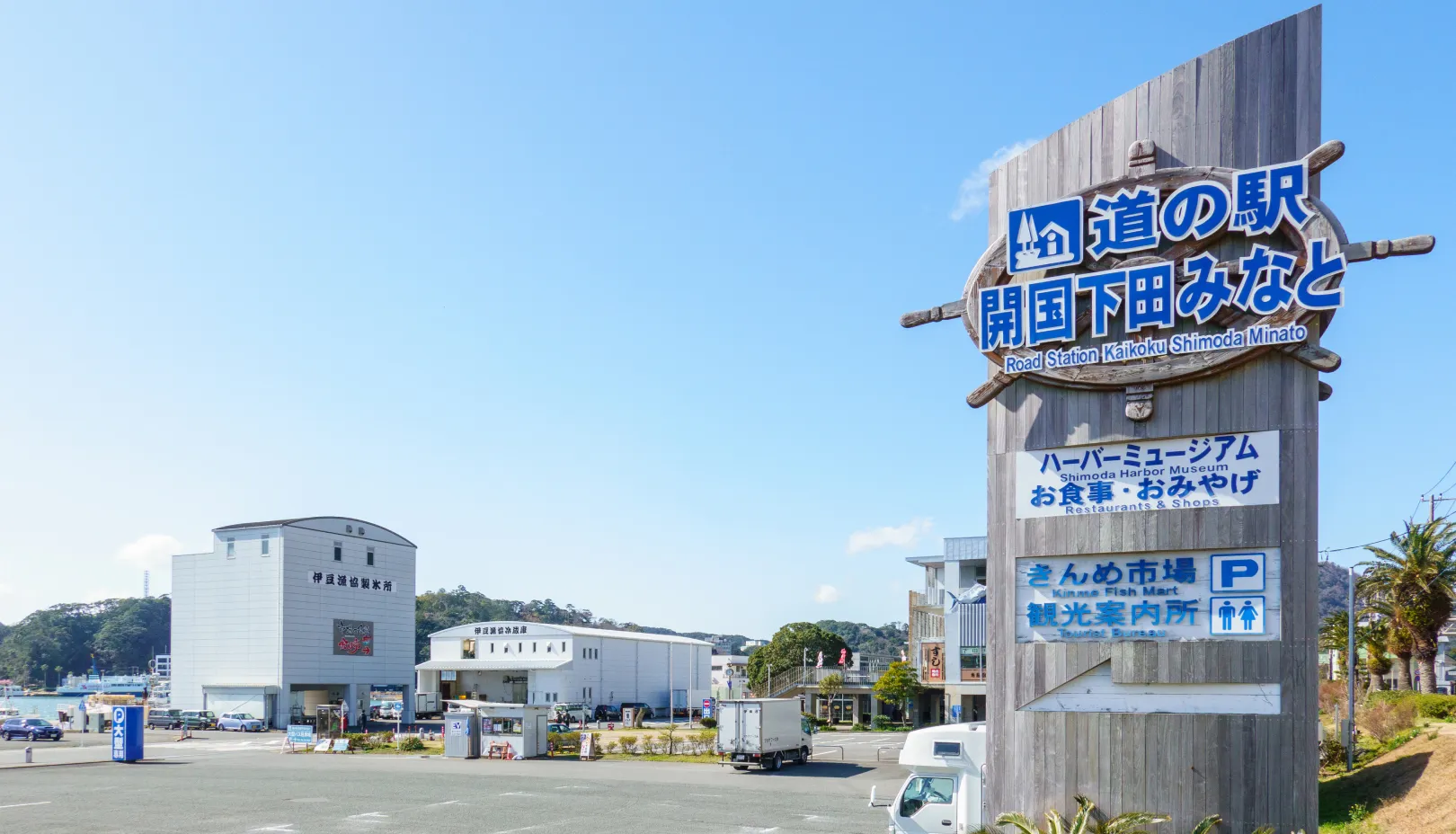
"Michi-no-Eki Kaikoku Shimoda Minato" is a roadside station located along Shimoda Port.
It offers a wide range of dishes centered on golden eye snapper (kinmedai), a local specialty of Shimoda, including simmered and dried varieties along with dishes made from fresh local seafood.
The gift shop is stocked with specialties unique to Shimoda, making it the perfect final stop of your trip.
An exhibition facility nearby also lets you experience the history of Shimoda, the town where the Black Ships first arrived, so you can enjoy sightseeing and shopping in one visit.
It's a convenient 15-minute drive from Ikonahime-jinja Shrine under normal conditions.
Be sure to stop by as the perfect finish to your trip to Shimoda.Michi-no-Eki Kaikoku Shimoda Minato
- Address
- 1-1 Sotogaoka, Shimoda-shi, Shizuoka 415-0000
- Operating Hours
- 9:00A.M.–6:00P.M.
※Hours vary by facility. Please check the official website for details. - Admission
- Free
※Some facilities inside may require a separate fee.
-
-
An ocean-view resort for taking in the scenery of Izu
H Shimoda Prince Hotel
-
▲From Shimoda Prince Hotel's official website: "Shimoda Prince Hotel, standing right in front of Shirahama Beach"
-
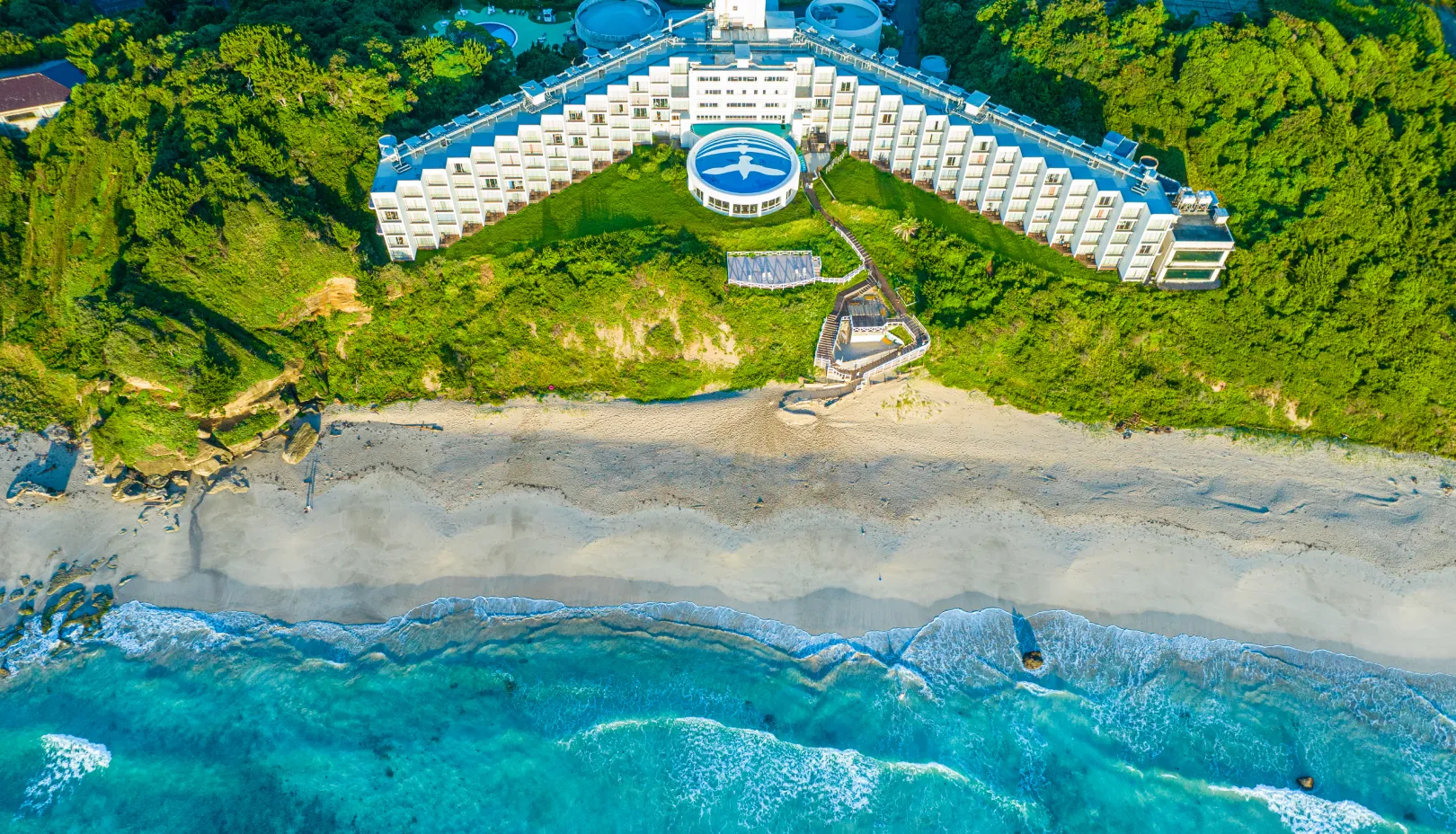
▲From Shimoda Prince Hotel's official website: "An aerial view of Shimoda Prince Hotel and Shirahama Beach"
-
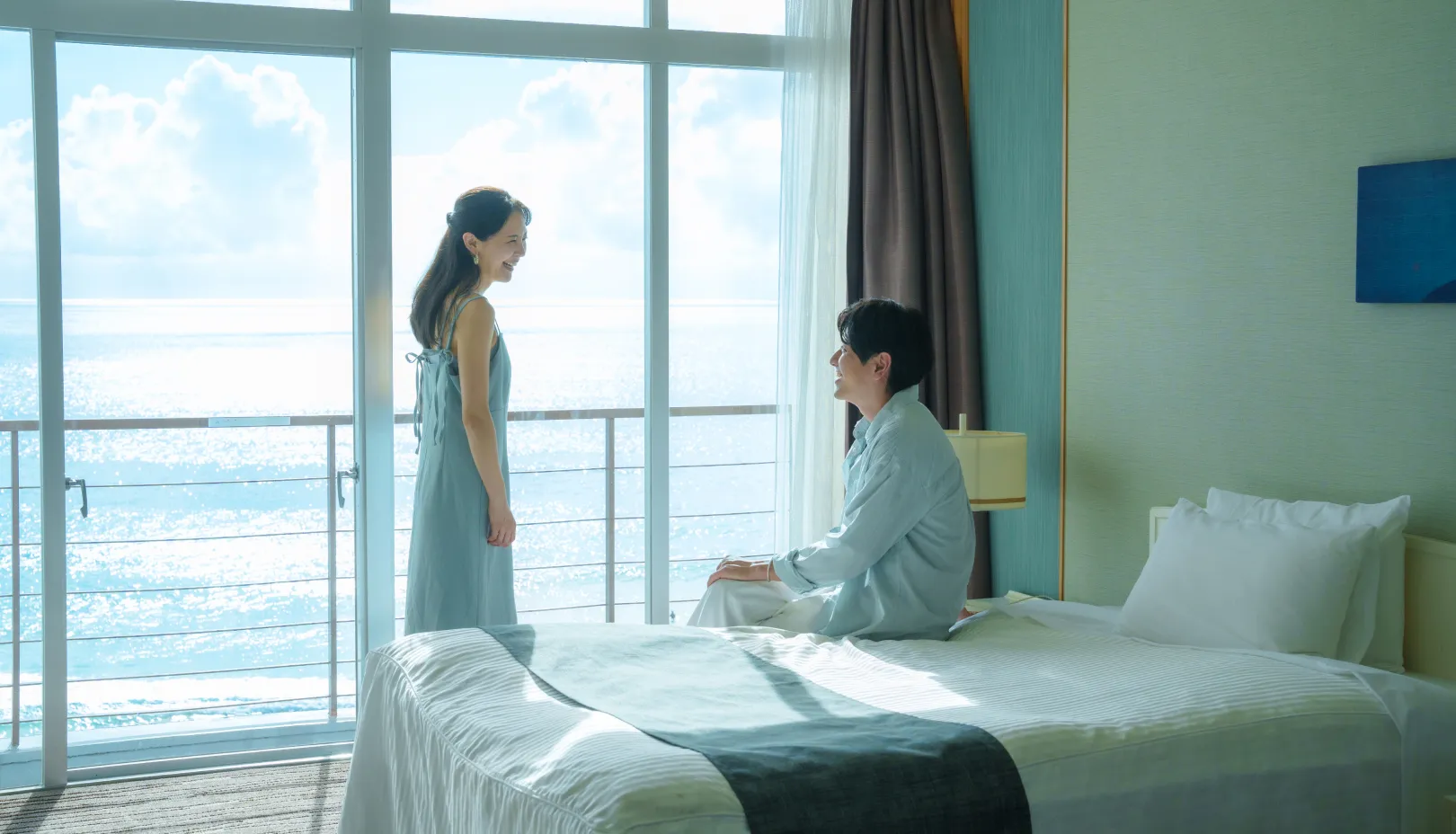
▲From Shimoda Prince Hotel's official website: "A special moment in an ocean-view guest room"
-
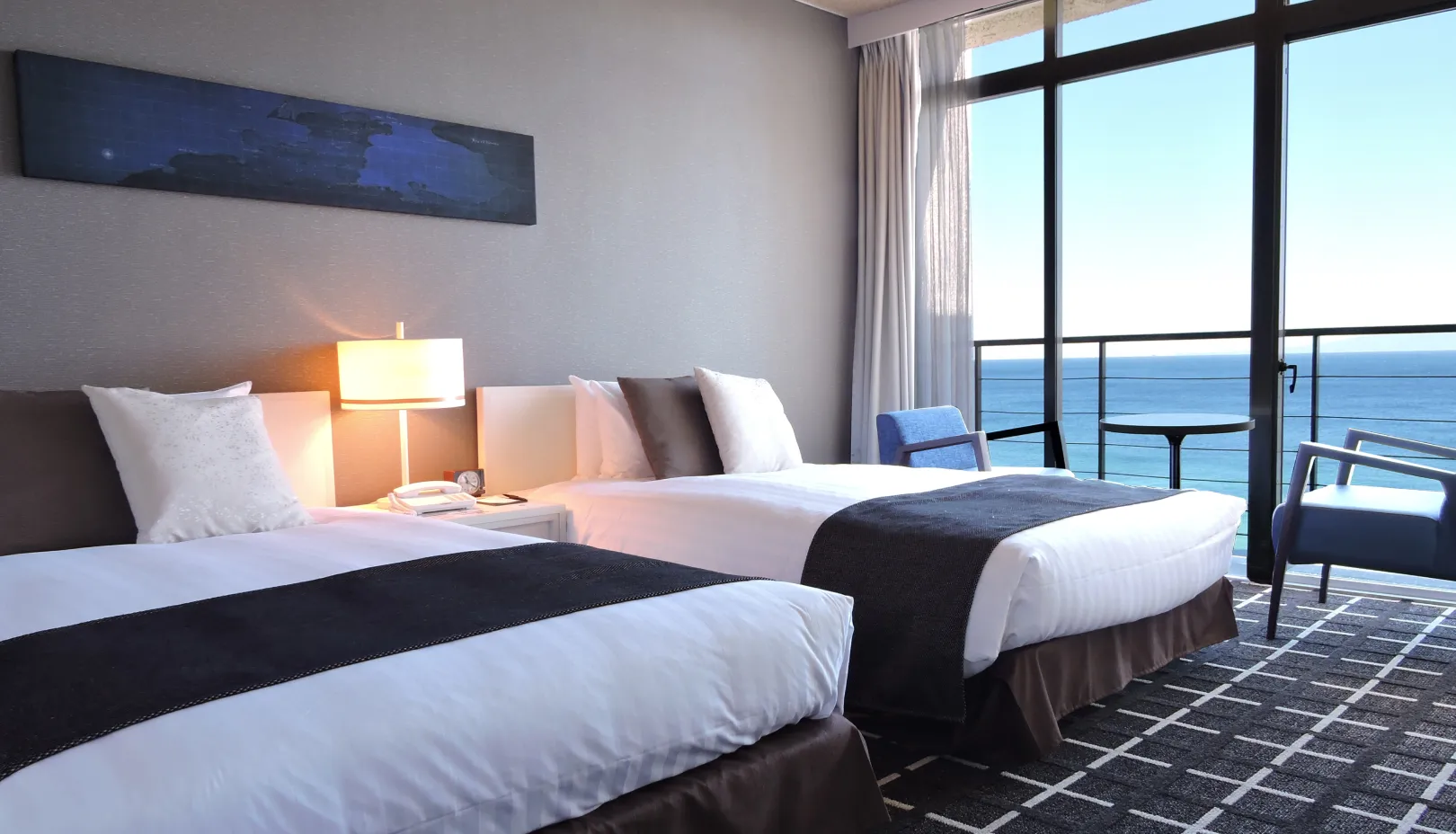
▲From Shimoda Prince Hotel's official website: "A twin room overlooking the sea"
-
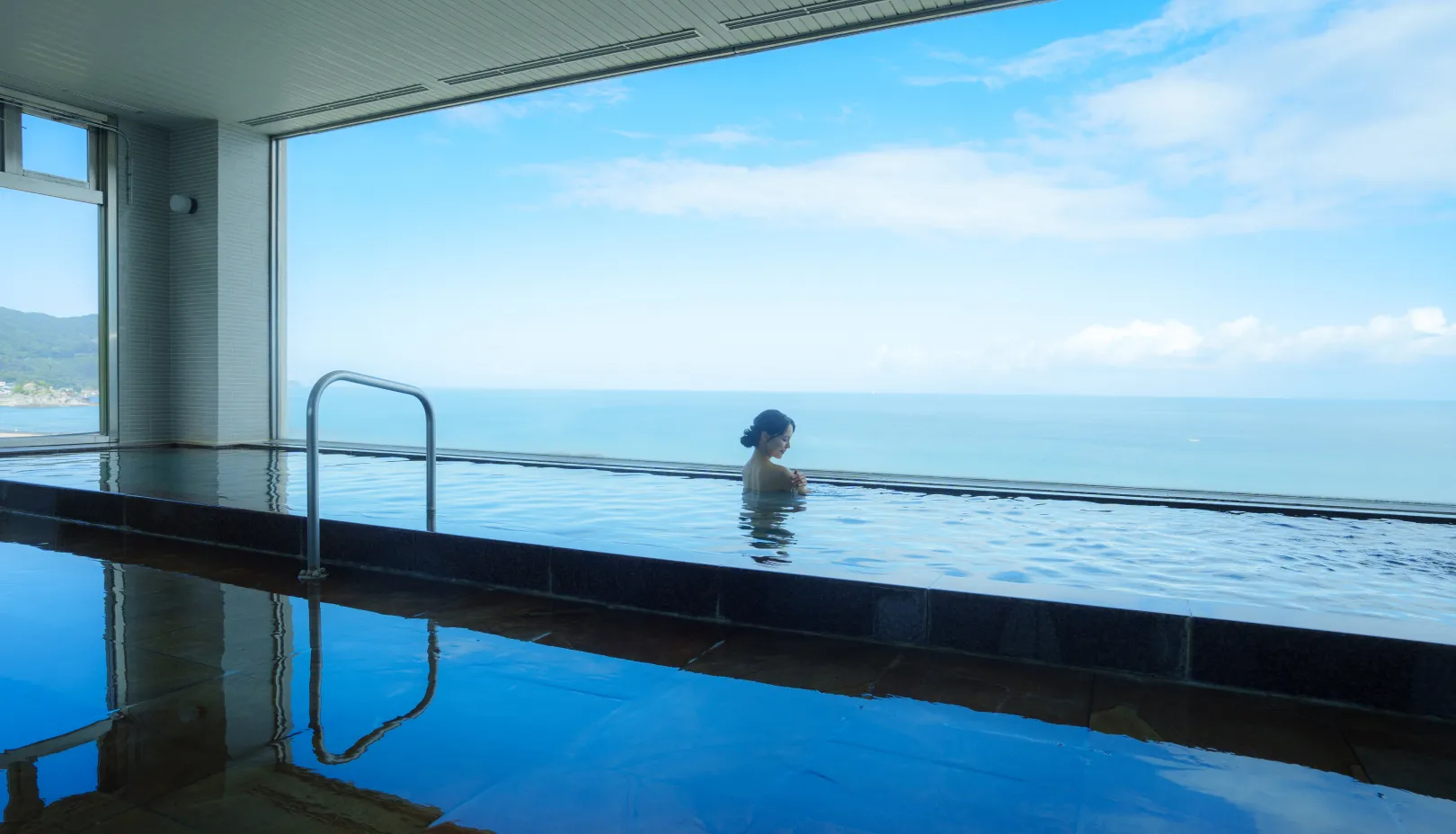
▲From Shimoda Prince Hotel's official website: "The scenic large public bath overlooking the Pacific Ocean"
-
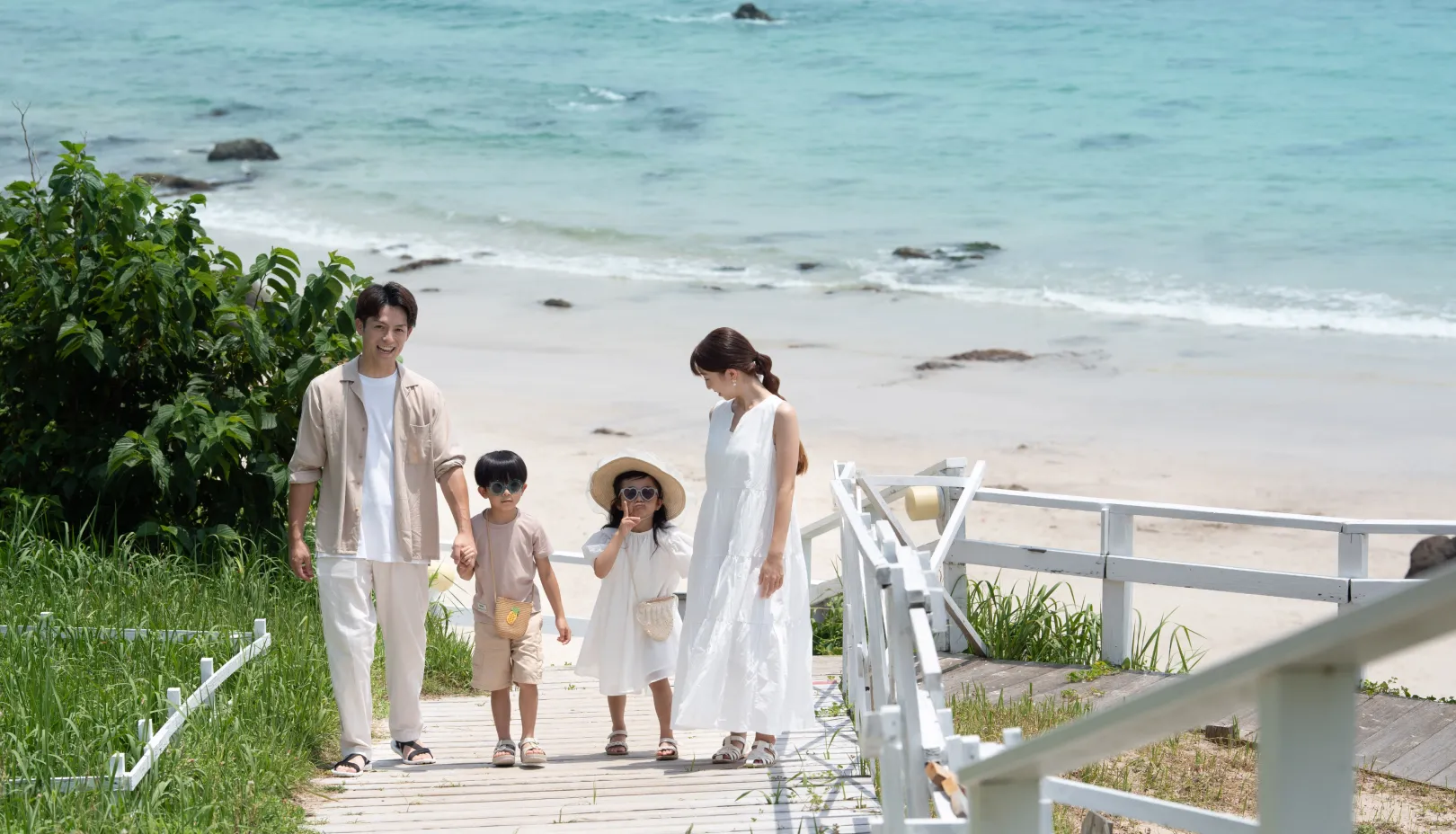
▲From Shimoda Prince Hotel's official website: "Shirahama Beach, just a short walk from the hotel"
-
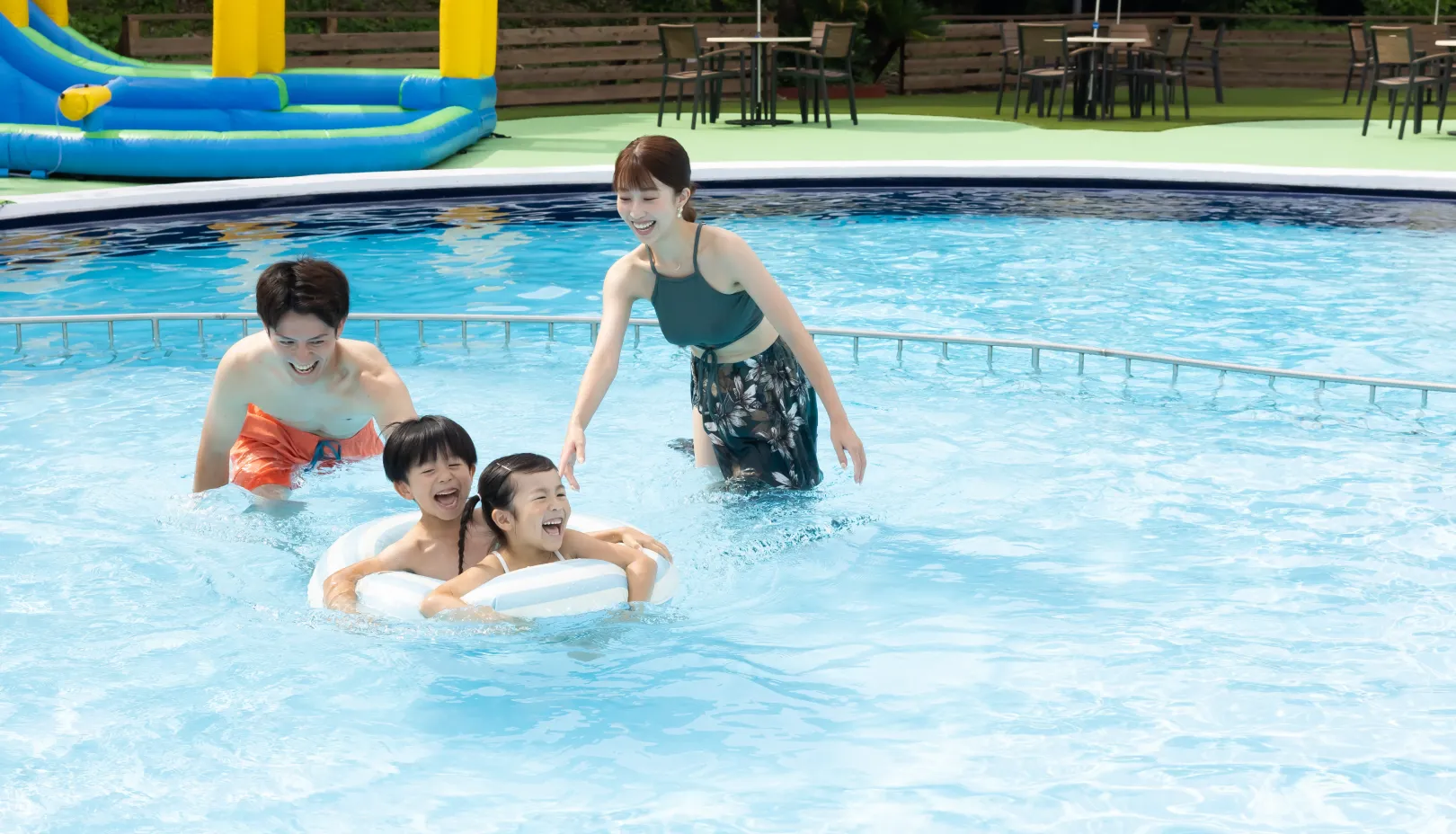
▲From Shimoda Prince Hotel's official website: "The outdoor pool, open for a limited season in summer"
-
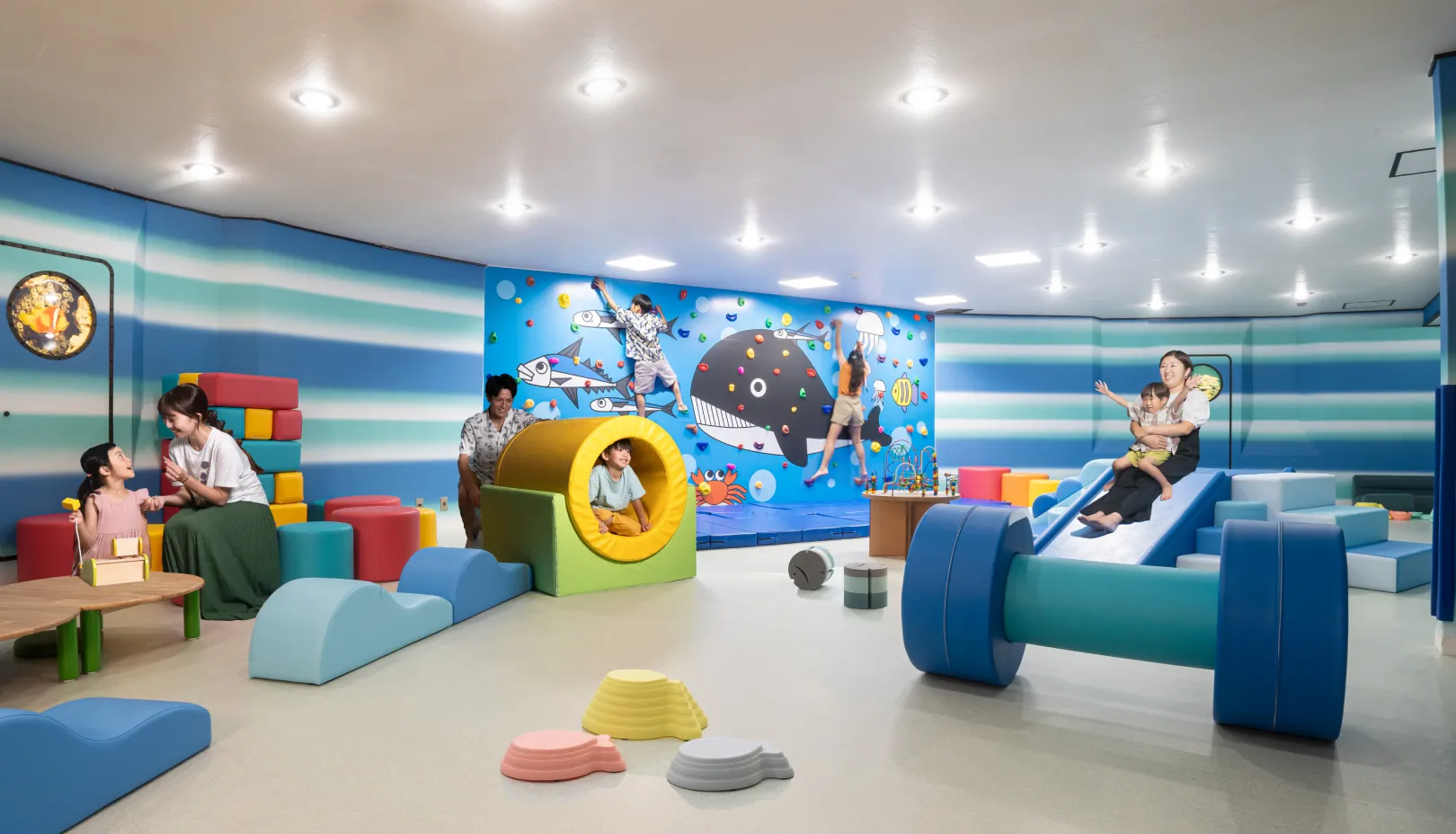
▲From Shimoda Prince Hotel's official website: "The kids' room, a hit with children"
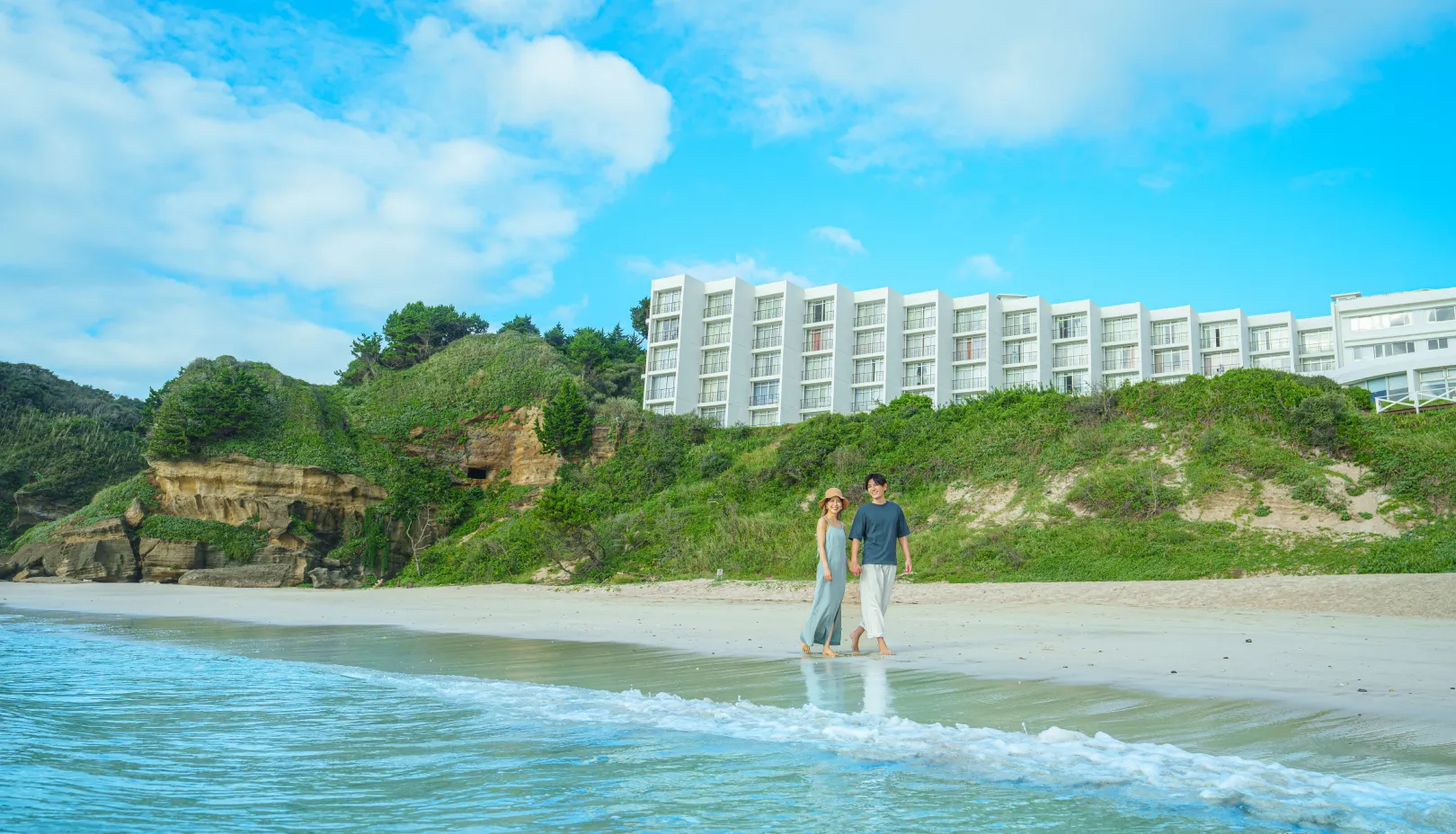
Right beside Ikonahime-jinja Shrine, and set in a prime location facing Shirahama Beach, "Shimoda Prince Hotel" is one of Izu's premier seaside hotels.
It's the ideal base for a shrine visit and sightseeing around Shimoda.
The hotel's greatest appeal is its ocean-view guest rooms, every one offering scenic views.
The horizon of the Pacific Ocean stretches beyond the large windows, letting you have the sunlit sea to yourself at dawn and a sparkling starry sky all to yourself at night.
At the scenic large public bath overlooking the glittering sea, you can enjoy a bathing experience with an open feel, as if merging with the horizon itself.
The sea's changing expressions from morning to noon to evening will gently soothe away the fatigue of your travels.
The hotel is also well equipped with facilities that make it a great choice for family trips.
The seasonal outdoor pool and the ocean-creature-themed kids' room inside the hotel are hugely popular with children.
Access is also excellent to all the spots introduced here, including Ikonahime-jinja Shrine, Ryuguu Cave, the Shimoda Ropeway, and Shimoda Floating Aquarium.
Please make it your base for exploring Shimoda.Shimoda Prince Hotel
- Address
- 1547-1 Shirahama, Shimoda-shi, Shizuoka 415-8525
-
Q&A About Ikonahime-jinja Shrine (Shirahama Shrine)
-
1 Q. Is it crowded during the summer swimming season (July–August)?
-
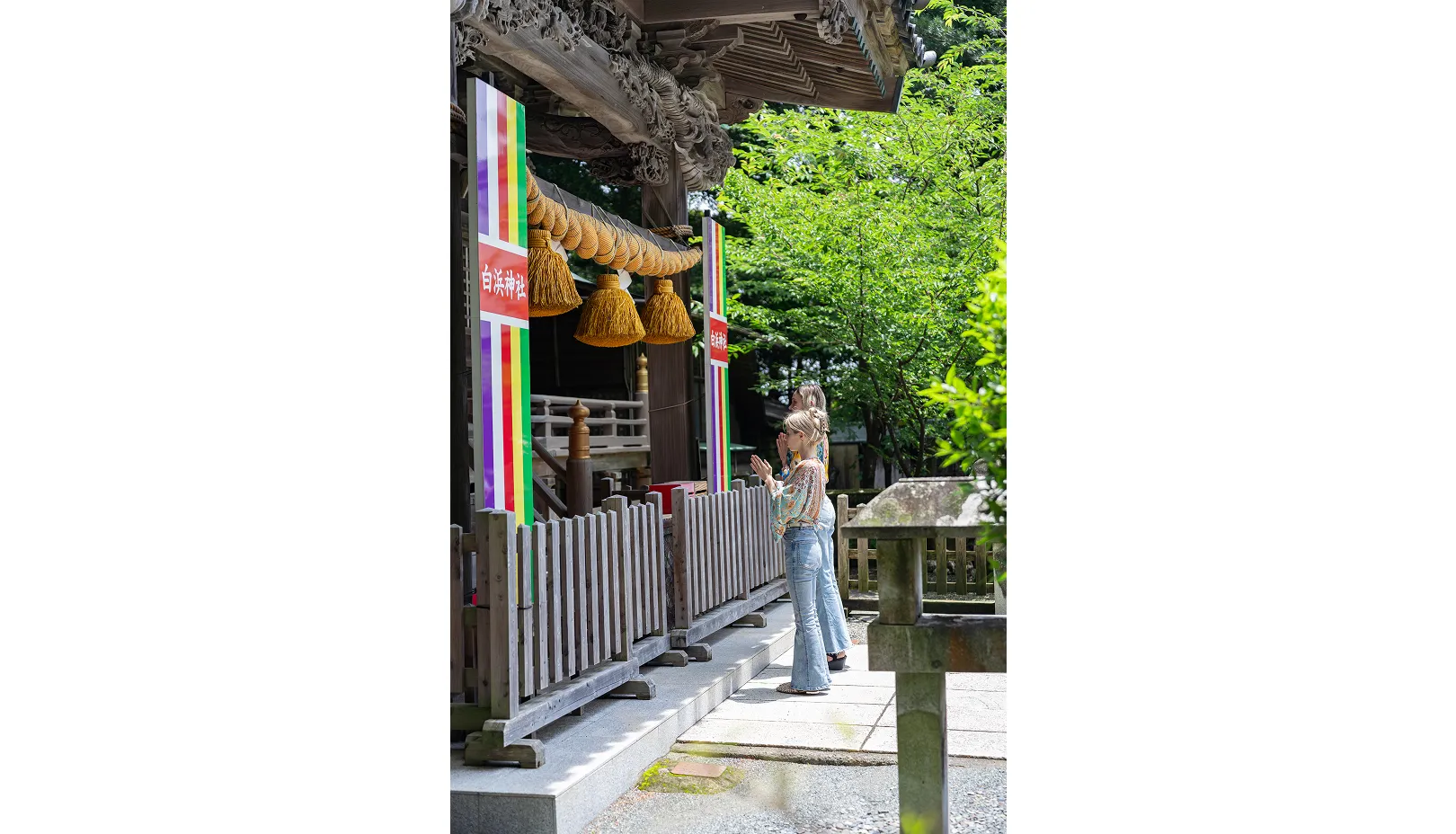
▲From Shimoda Prince Hotel's official website: "A moment of prayer at the main hall of Ikonahime-jinja Shrine (Shirahama Shrine)"
Yes, the area around the shrine is at its most crowded of the year during this time.
Since Shirahama Beach right in front of the shrine is a popular summer beach, National Route 135 in front of the shrine gets congested during the summer holidays, especially on weekends and around the Obon holiday.
If you're planning to visit, we recommend coming early in the morning or on a weekday.
Outside of summer (fall through spring), crowds ease up considerably, letting you enjoy the grounds at a relaxed pace. -
-
2 Q. Can I walk to the famous "torii gate standing in the sea"?
-
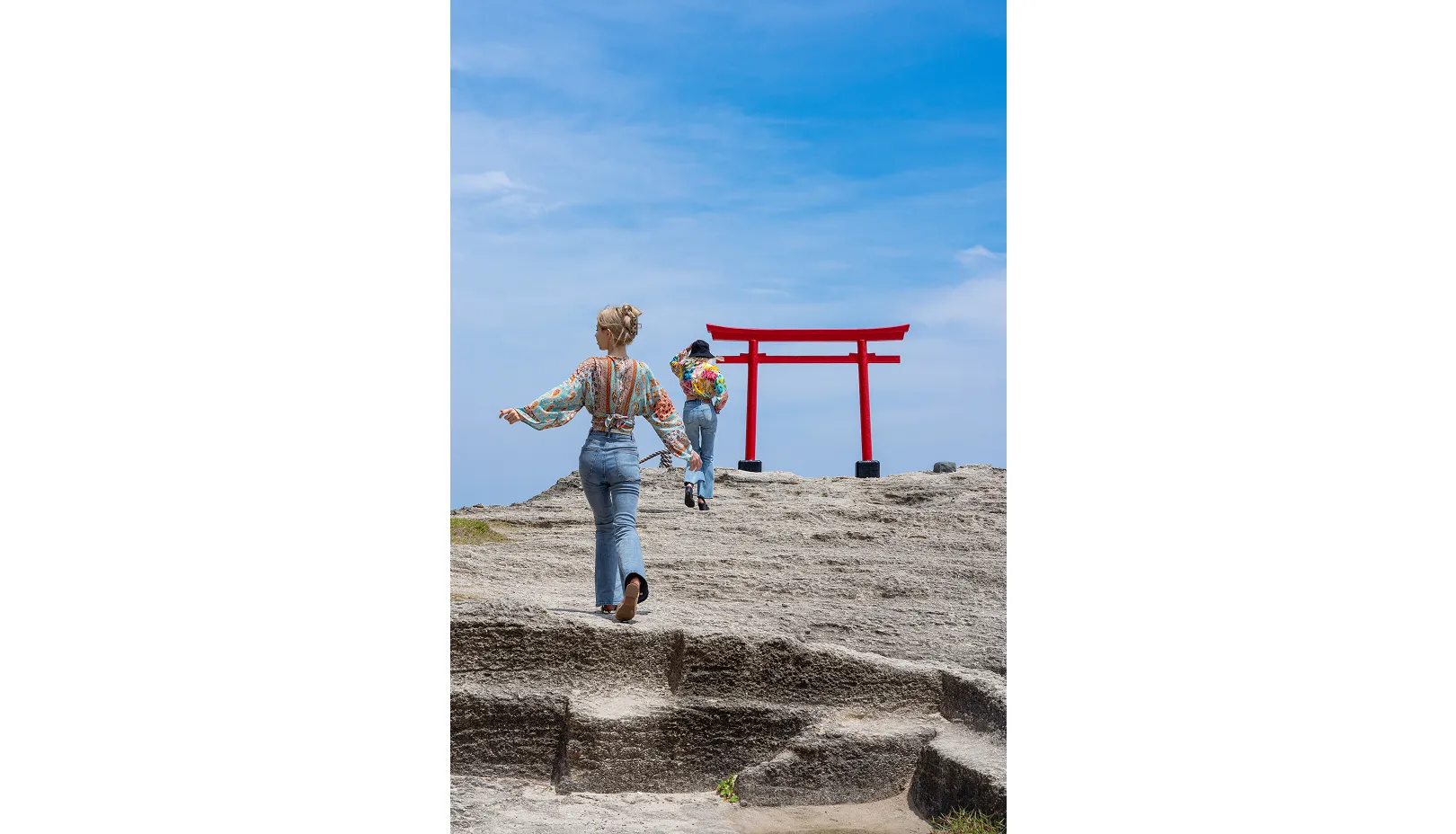
▲From Shimoda Prince Hotel's official website: "The path leading to the vermilion torii gate atop Daimyojin Rock"
Yes, you can walk there.
After paying your respects at the main hall, you can follow the path behind the grounds out to Shirahama Beach.
From there, the red torii gate stands on the rocky outcrop (Daimyojin Rock) to your left.
Since you'll need to walk a short way across sand and rocks, we recommend wearing comfortable walking shoes.
Please also note that depending on the weather and wave conditions, it may not always be possible to get close to the torii gate. -
-
3 Q. Can I receive a goshuin (shrine seal)? Until what time?
-
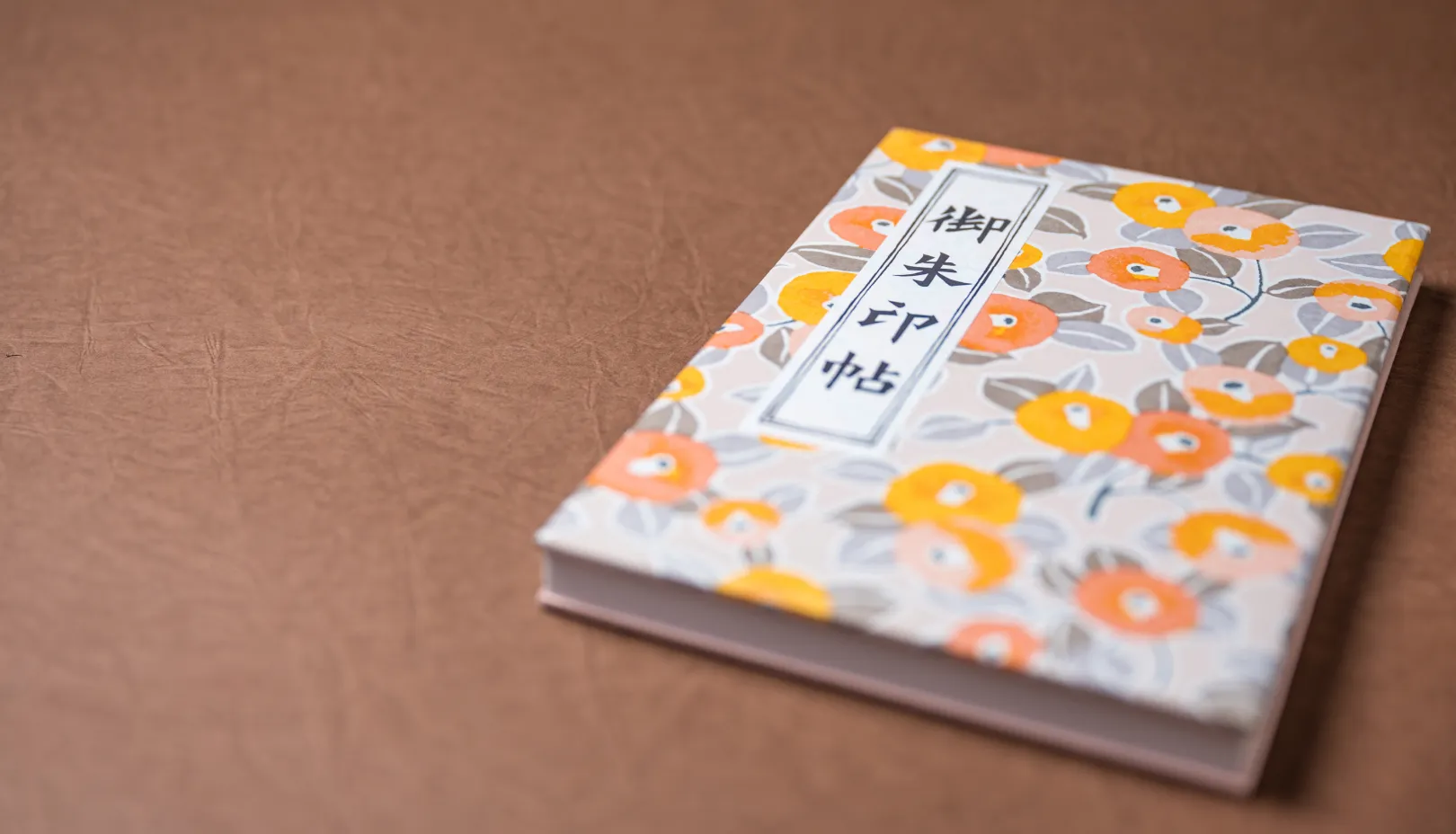
▲From Adobe Stock: "Image of a goshuin stamp book"
Yes, you can receive one at the shrine office.
In addition to the regular goshuin, limited-edition designs such as papercut goshuin are sometimes available.
Reception hours run roughly from 9:00A.M. to 4:00P.M. (with some seasonal variation).
Whether you receive a hand-written goshuin or a pre-written paper version can vary by day, so please check on-site for details. -
-
4 Q. What's the best time of day to visit?
-
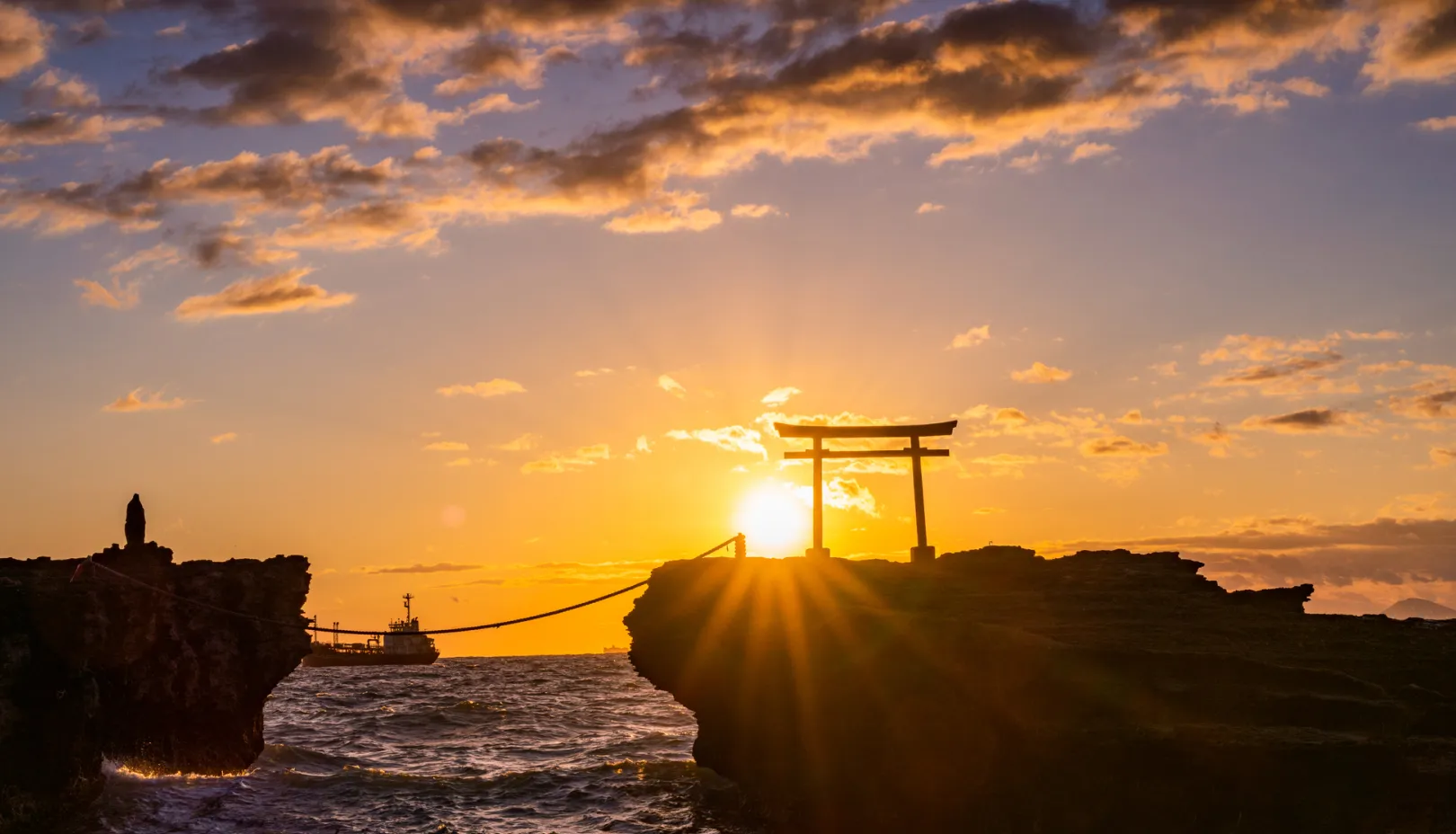
▲From PIXTA: "The torii gate lit by the early morning sunrise"
Early morning (before noon) is highly recommended.
Since the shrine gets especially crowded during the summer swimming season, visiting early in the morning is the key to enjoying the grounds at a relaxed pace.
Visiting while the morning light streams in also heightens the sacred atmosphere.
During the quieter hours in particular, you can take your time admiring the sacred tree, the torii gate, and the natural surroundings, and settle your mind in the refreshing morning air. -
Summary
Make Shimoda Prince Hotel Your Base for Visiting Ikonahime-jinja Shrine
With more than 2,400 years of history, Ikonahime-jinja Shrine is Izu's oldest shrine, famous as one of Shimoda's leading power spots for its blessings of good relationships and marital harmony, and for the breathtaking view of the vermilion torii gate standing on Shirahama Beach.
The grounds also offer plenty to see, from the sacred tree to Mime Benzaiten.
Nearby, there are many more spots worth visiting together, including Ryuguu Cave, Ryosenji Temple, and Shimoda Floating Aquarium.
To make the most of your visit to Ikonahime-jinja Shrine and sightseeing around Shimoda, we recommend making "Shimoda Prince Hotel" your base.
The ocean-view guest rooms open onto stunning views of the Pacific Ocean, adding an extra touch of richness to your trip.
- Shrine Highlights
- Why It's a Power Spot
- Recommended Spots in Shimoda
- Q&A
- *The photo is for illustrative purposes only. The actual content may differ.
- *The content may be subject to change.
Recommended Articles
You May
Also Like


The best views are at Prince.
Experience breathtaking scenery with all your senses.
Enjoy breathtaking rooms with significant views.
Unwind in hot springs beneath an incredibly close starry sky.
Savor dinners surrounded by enchanting night views.
Experience unique "spectacular nature" that makes your trip special.
Come and immerse yourself in unforgettable natural beauty.