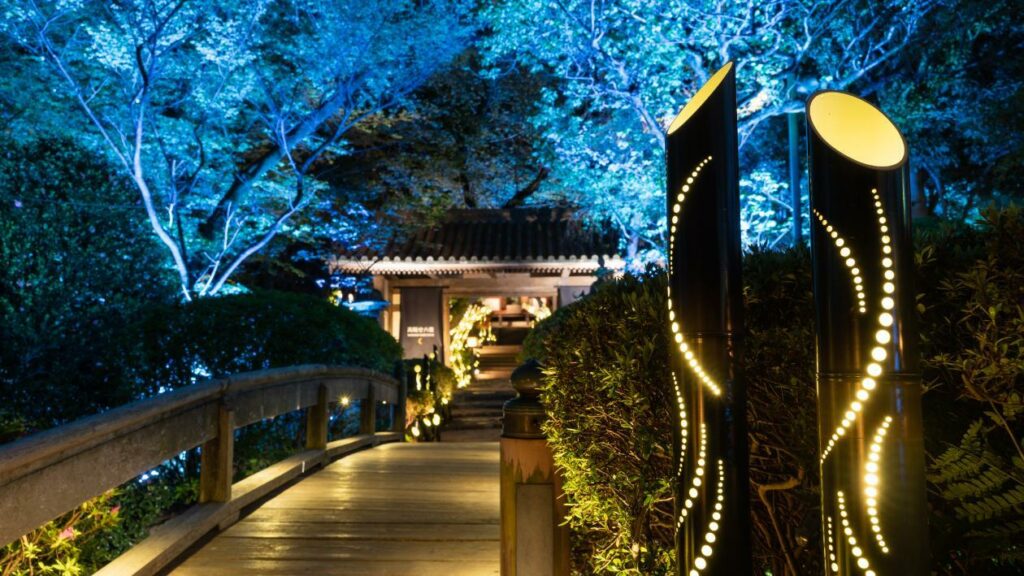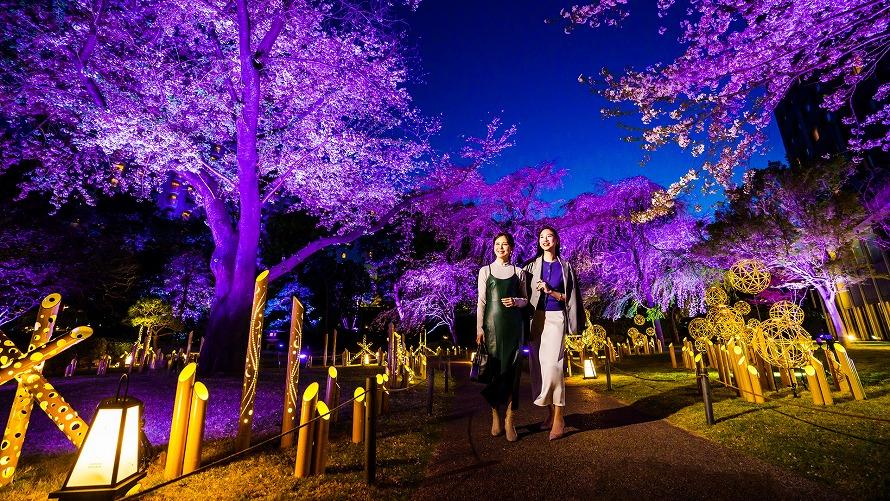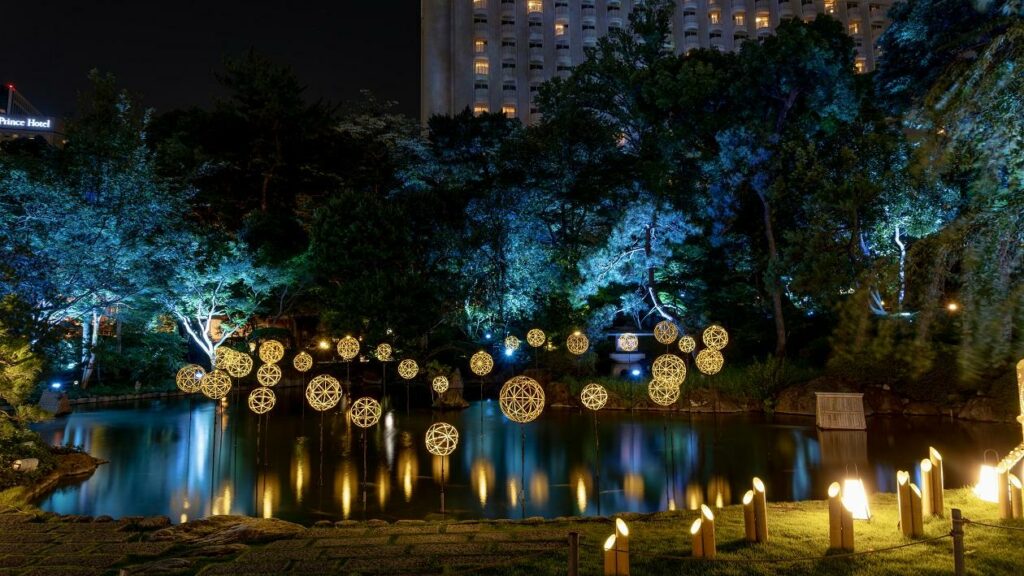

Japanese Garden
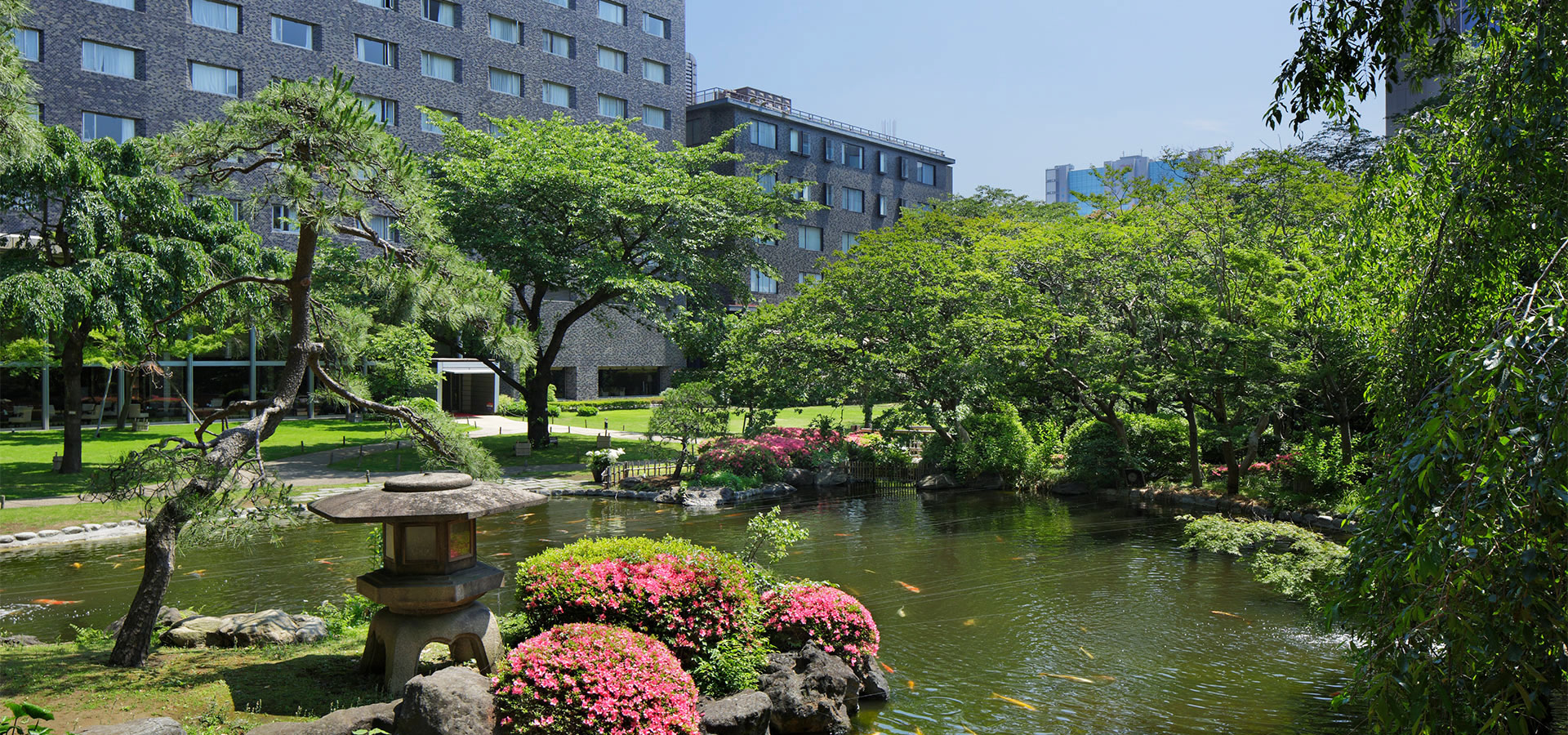
Takanawa’s Japanese garden, which covers about 20,000 m², was designed by Kusuoka Teiji, who worked on the new Imperial Palace. Dotted around the garden, there are 16 kinds of flowers – from which the names of the TAKANAWA HANAKOHRO rooms were derived – as well as about 210 cherry trees of 17 varieties, a pond with carps, Sakurabashi bridge across the stream, a temple dedicated to Kannon, and a bell tower.
Historical Structures in the Japanese Garden
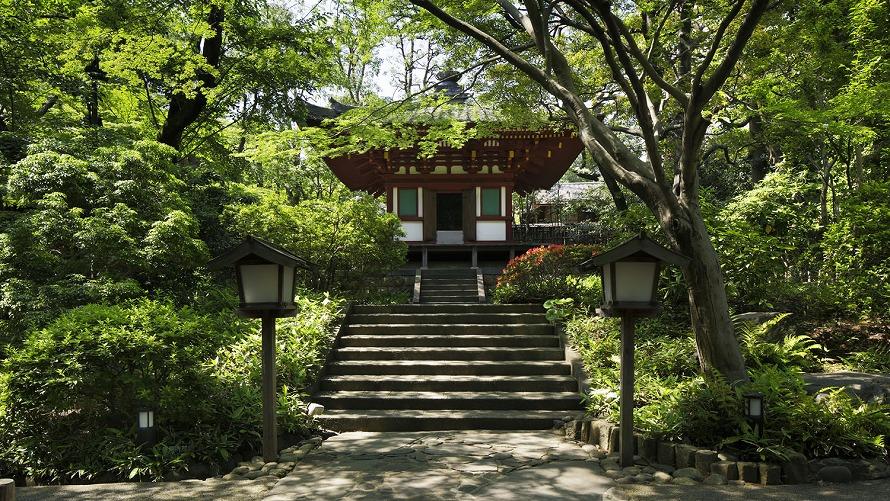
Kannon-do (観音堂)
This building is said to be the first of a three-story pagoda at Chokyuji Temple in Ikoma City, Nara Prefecture. The construction date is estimated to be from the end of the Kamakura period (1185-1333) to the Nanbokucho period (1337-1392), based on the architectural style. By the time of the Enkyo period (1744-8), the middle and upper stories seem to have already been lost.
In 1936, it was moved to Kamakura City, Kanagawa Prefecture. In 1954, it was relocated to its current location, which became the Takanawa Prince Hotel.
In 2007, repairs were made to the roof and other parts of the building.
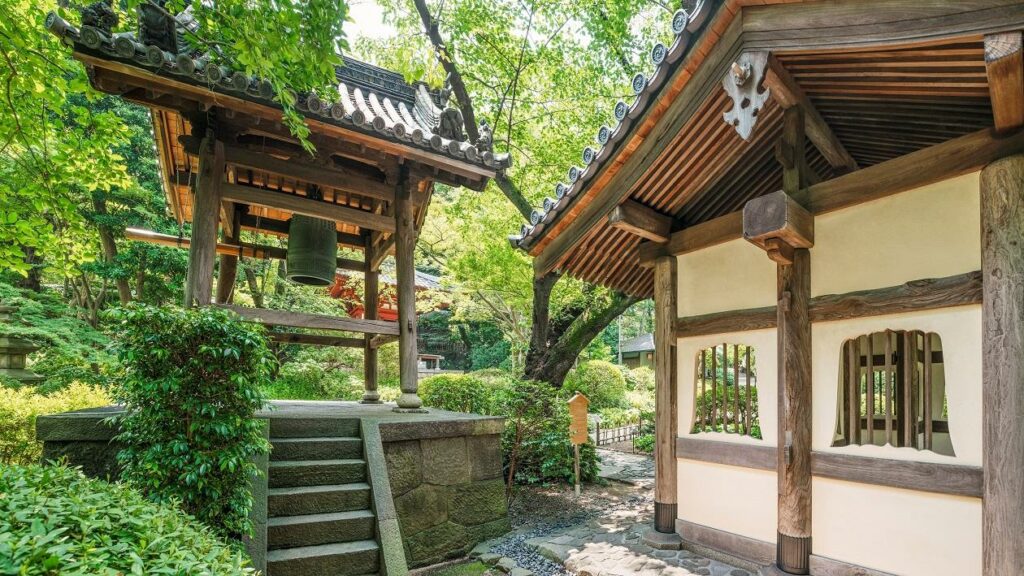
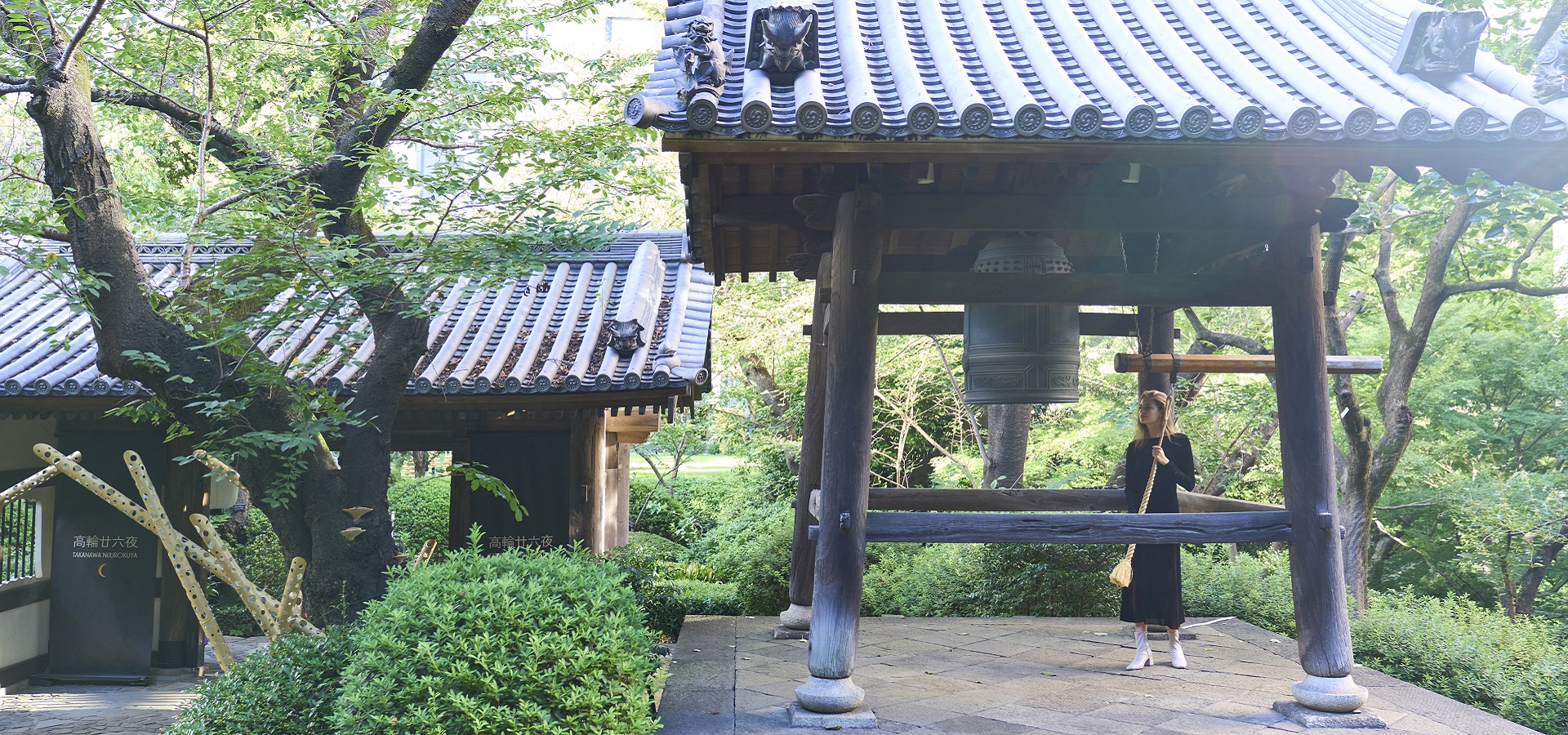
Bell Tower (鐘楼)
A gabled bell tower with a main tile roof is located adjacent to Kannon-do Hall.
It was built in 1656, and moved from Nenbutsuji Temple in Nara City, Nara Prefecture, in 1959.
The design on the headpiece, in which two simple leaves extend from a whorl in the shape of a tree gourd, is characteristic of the mid-17th century.
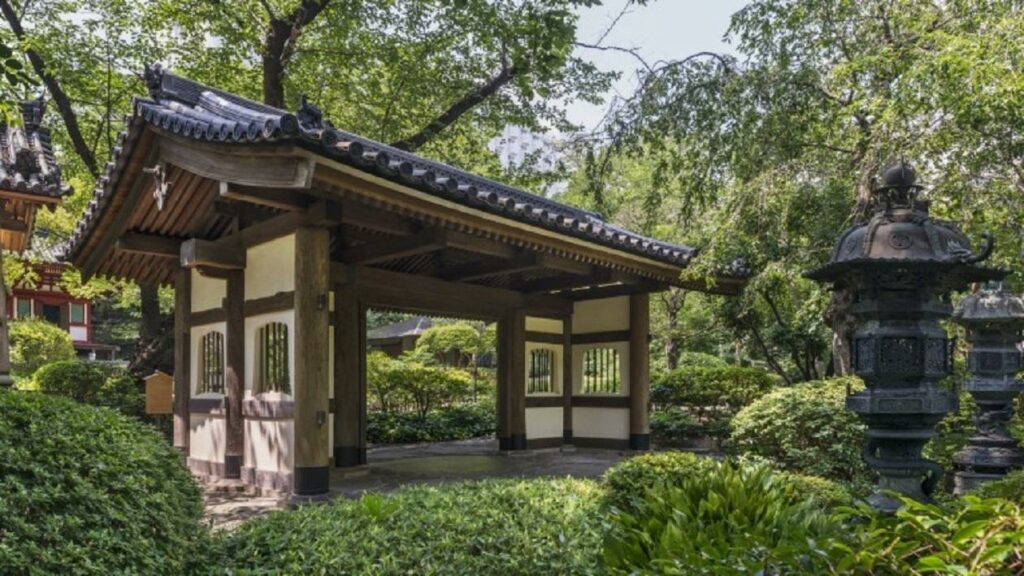
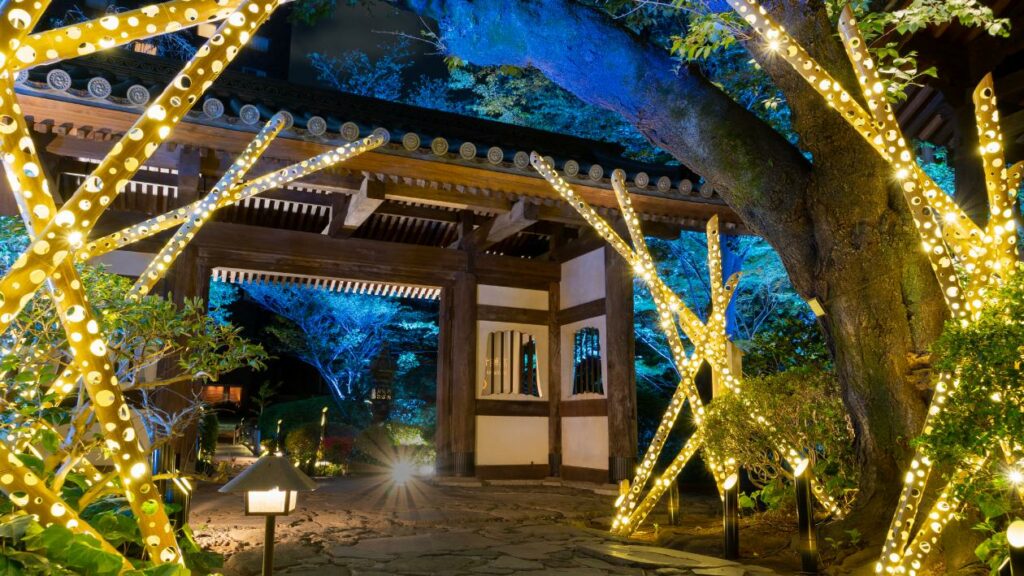
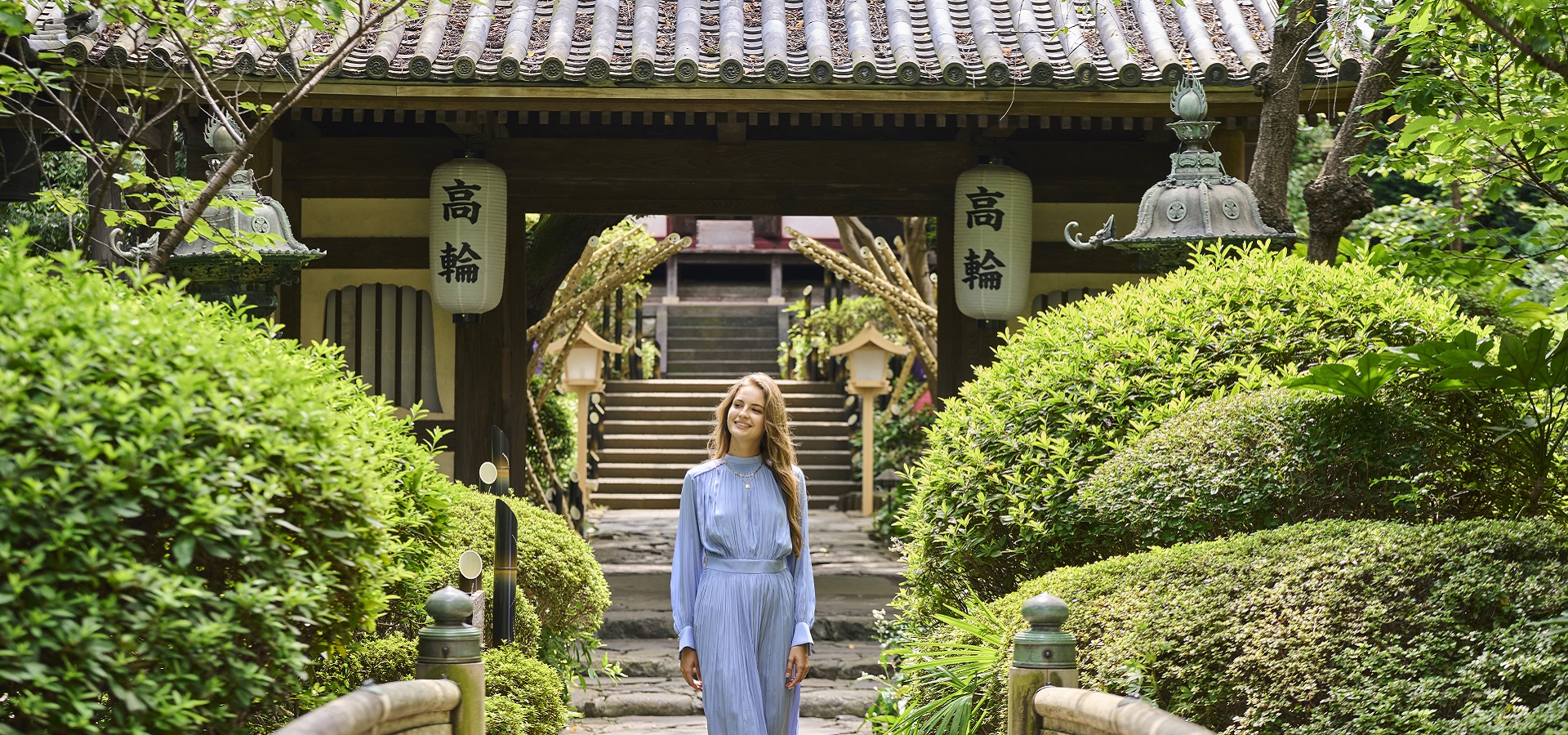
Temple Gate (山門)
Neither the artist nor the history of the building is known.
The tile pattern is the same as that of the bell tower, and it is thought to have been moved at the same time as the Kannondo.
The roof is gabled with a tile roofing and two eaves rafters. The pillars are in the Zen Buddhist style. The walls are now sand walls.
The bronze lantern was transferred from the mausoleum of the Tokugawa shoguns of the Edo period (now the Tokyo Prince Hotel).
About “TAKANAWA NIJUROKUYA”
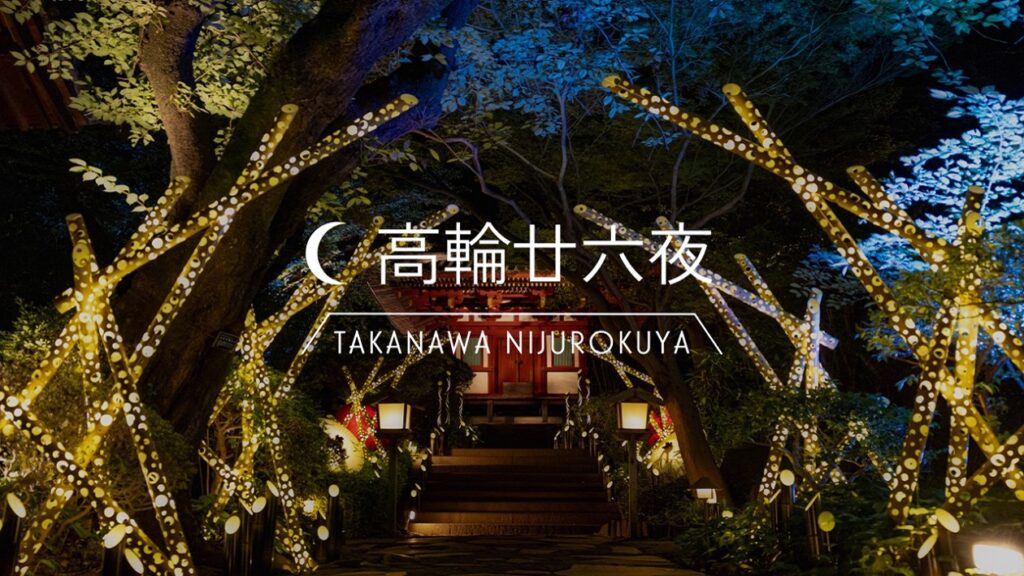
During the Edo period in Takanawa, where areas were covered with fine-view hills, there was a custom of praying and waiting for the moon to rise. The evenings of January 26th and July 26th of the lunar calendar were known as Nijurokuya-machi, when many enjoyed drinking and eating at stalls and waiting for the mysterious moon to rise.
Grand Prince Hotel Takanawa has added a modern twist to this unique aspect of Takanawa culture. Takanawa Nijurokuya offers guests moon-waiting experiences at various locations throughout the hotel.
Tonight, abandon the city’s glare for soft moonlight at the Prince Hotels in Takanawa.